Loading...

“40 Minutes to Die,” Court Was Told – Supreme Court Keeps Hanging, But Not Forever

The Supreme Court on Tuesday, refused to strike down hanging as the method used to carry out a death sentence. But it left room for the matter to be looked at again in the future, if strong medical or scientific proof comes up.

A Bench of Justice Vikram Nath and Justice Sandeep Mehta dismissed the petition against Section 354(5) of the Code of Criminal Procedure (CrPC). They made  it clear that this ruling does not stop someone from challenging it again in future, and it also does not stop the Union Government from checking on its own whether a better method exists : one that causes less pain and protects the dignity of the prisoner.

What the Petition Asked For

The petition was filed by Advocate Rishi Malhotra. It challenged Section 354(5) of the CrPC, the rule that says a death sentence must be carried out by ordering that the prisoner “be hanged by the neck till he is dead.”

The petitioner argued that hanging causes long physical suffering and goes against the right to dignity guaranteed under Article 21 of the Constitution.

The petition asked for two things:

1. To declare Section 354(5) CrPC unconstitutional,  calling it discriminatory, against Article 21, and against the earlier Supreme Court ruling in the Gian Kaur case and

2. To declare that dying through a dignified process is a fundamental right under Article 21.

Why the Petitioner Called Hanging Cruel

The petitioner said hanging was “barbaric, inhuman and cruel.” He asked that it be replaced with methods like intravenous lethal injection, shooting, electrocution, or a gas chamber. He said these methods cause death much faster, and so cause less suffering.

Comparing India’s Rules with International Standards

The petition also pointed to United Nations Economic and Social Council (ECOSOC) resolutions, which say that “where Capital punishment occurs, it shall be carried out so as to inflict minimum possible suffering.”

How Long Does Each Method Take?

The petitioner compared the time taken by different methods. He said hanging, from start to finish, could take more than 40 minutes before death is confirmed. Shooting, he said, takes only a few minutes, and lethal injection ends the process in about five minutes.

The Court’s Earlier Steps on This Issue

The Supreme Court first took up  this matter in March 2023. At that time, it considered setting up an expert committee to study  the way hanging  is currently carried out .  The Court asked Attorney General R. Venkataramani to gather details on how hanging affects the body, how much pain is involved, how long it usually takes for death to occur, and what resources are needed to carry it out.

In May 2023, the Attorney General told the Court that the government was thinking about forming an expert committee to look for a better method than hanging. The government later said this matter was being examined at the highest level, and that committees had already been set up to study it.

The Petitioner’s Argument for Choice

During the hearings, the petitioner  spoke strongly in favour of  lethal injection, pointing out how widely it is used  across the United States. He told the Court: “Atleast give an option to the condemned prisoner whether he wants hanging or lethal injection…lethal injection is quick, humane and decent, as opposed to hanging, which is cruel, barbaric and lingering…for 40 minutes, the body lingers on the rope.” He also pointed out  that, in certain situations, members of the armed forces are sometimes given a choice in how they die.

The Bench’s Concerns During Hearings

The Bench questioned why the Union Government was against letting death row prisoners choose between hanging and lethal injection. Justice Mehta also raised a separate concern : the psychological toll that carrying out executions can take  on the hangmen themselves.

What Project 39A Told the Court

Project 39A also took part in the case and gave its views on other possible  execution methods, especially lethal injection.

Project 39A, an initiative of National Law University, Delhi working on criminal justice and legal reform, also assisted the Court during the proceedings and made submissions concerning the viability of alternative execution methods, particularly lethal injection(source: Google).

It pointed to the experience in the United States, where lethal injection is widely used but has also faced serious concerns: about whether it actually works well and how much suffering it causes.

Project 39A suggested that an expert committee should study the available options closely and gather scientific and medical evidence before reaching any conclusion. It also accepted that hanging does involve some pain and suffering, since death is not instant.

The Final Judgment

The case was reserved for judgment in January. The petitioner had relied, among other things, on a Law Commission of India report that compared different methods of execution.

The Supreme Court dismissed this particular petition. But  it kept the door open for the issue to be looked at again later, if the situation calls for it. The Court said that if strong medical or scientific evidence comes up in the  future showing that a change is needed,  that evidence could be used to challenge the current method in court.

The judgment also does not stop the Union Government from carrying out its own detailed review, through an expert body , to check whether another method would work  better: one that  reduces pain and protects the dignity of the condemned prisoner.

Case Details: Case Title: Rishi Malhotra v. Union of India, W.P.(Crl.) No. 145/2017
Justice Datta’s 12 Words End Rahul Gandhi’s Savarkar Case: “That Is the End of the Matter”

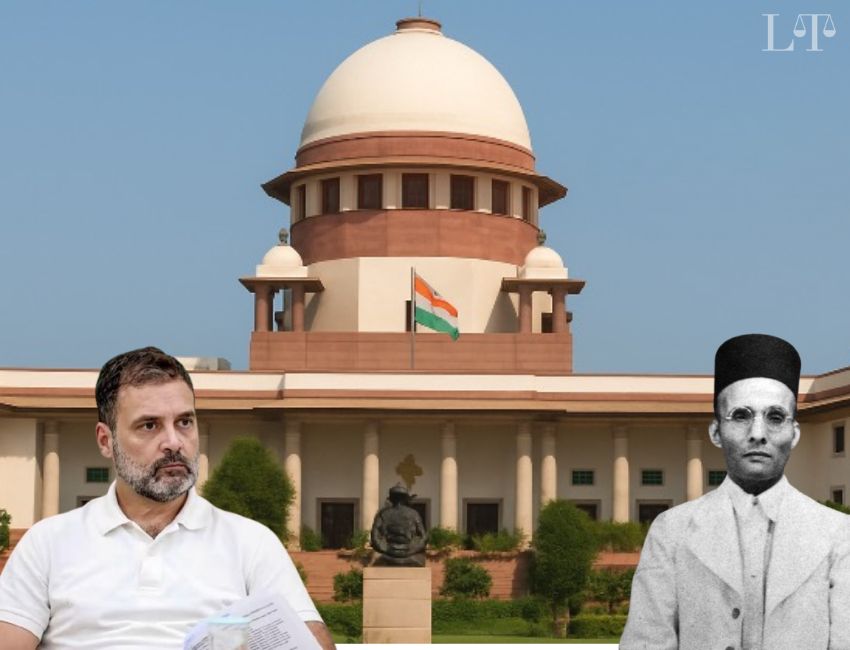
The Supreme Court on Friday ended the criminal case against Congress MP and Leader of Opposition Rahul Gandhi in Uttar Pradesh over his alleged remarks about Hindutva ideologue VD Savarkar.

A Bench of Justice Dipankar Datta and Justice Sheel Nagu held that the case against Gandhi could not continue because the government had not given the legal approval required to prosecute him.

No Government Sanction

The Court quashed the complaint and the Magistrate’s orders after the Uttar Pradesh Government confirmed that it had not granted sanction to prosecute Gandhi under Section 153-A of the Indian Penal Code (IPC).

Gandhi had challenged the trial court’s summoning order. The complaint alleged that his comments on Savarkar were intended to promote communal disharmony and hatred. The Allahabad High Court had earlier refused to quash the case.

During the hearing, Justice Datta asked whether the State Government had granted sanction for the prosecution. Additional Solicitor General KM Nataraj, appearing for Uttar Pradesh, told the Court that no sanction had been granted.

Law on Sanction

The case involved allegations under Sections 153-A and 505 of the IPC. Under Section 196 of the Code of Criminal Procedure, the State Government’s prior sanction is necessary before a court can take cognisance of an offence under Section 153-A IPC.

The complainant’s counsel argued that, since there was no sanction, the summoning order could be set aside and the case could be sent back to the Magistrate for fresh consideration. The counsel also said that necessary steps could be taken if sanction was legally required.

Justice Datta, however, made it  clear that the required government approval must be obtained before a court can formally take up the offence. It cannot be obtained later as a mere legal formality.

“If there is no sanction, that is the end of the matter,” Justice Datta stated.

Court Quashes Complaint

The Supreme Court then terminated the proceedings. The Bench said:

“In the affidavit filed by the State of UP, there is no disclosure of sanction having been granted to prosecute the appellant-accused. In such view of the matter, the complaint and orders passed by the magistrate stand quashed,”

Senior Advocate Dr Abhishek Manu Singhvi appeared for Gandhi.

Background of the Case

The case began with a complaint filed by Advocate Nripendra Pandey. He alleged that Gandhi had tried to create hatred and enmity in society through his remarks about Savarkar.

In December 2024, the trial court summoned Gandhi over statements allegedly made at a press conference. He was accused of calling Savarkar a servant of the British and alleging that Savarkar had received a pension from the British.

While issuing the summoning order, Addl. Civil Judge (Sr.Div.)/ACJM, Lucknow, Alok Verma observed:

“Distributing previously printed pamphlets and leaflets at press conferences demonstrates that Rahul Gandhi had weakened and insulted the basic characteristics of the nation by spreading hatred and enmity in the society”.

Earlier Court Proceedings

Gandhi later challenged the case before the Allahabad High Court, but his petition was not entertained. Justice Subhash Vidyarthi orally noted that Gandhi could approach the Sessions Court under Section 397 CrPC, corresponding to Section 438 of the BNSS. The petition was therefore disposed of.

Last year, the Supreme Court had stayed the proceedings while hearing Gandhi’s challenge. At that time, Justice Datta had orally strongly criticised the alleged remarks against Savarkar and questioned whether this was an appropriate way to treat freedom fighters.

The Court had also warned Gandhi that repeating such remarks could lead to “suo motu” contempt proceedings. However, because the required government approval was not obtained, the Supreme Court has now cancelled the complaint and all related orders against Gandhi.

Case Details: RAHUL GANDHI v. STATE OF U.P. AND ANR., SLP(Crl) No. 6196/2025

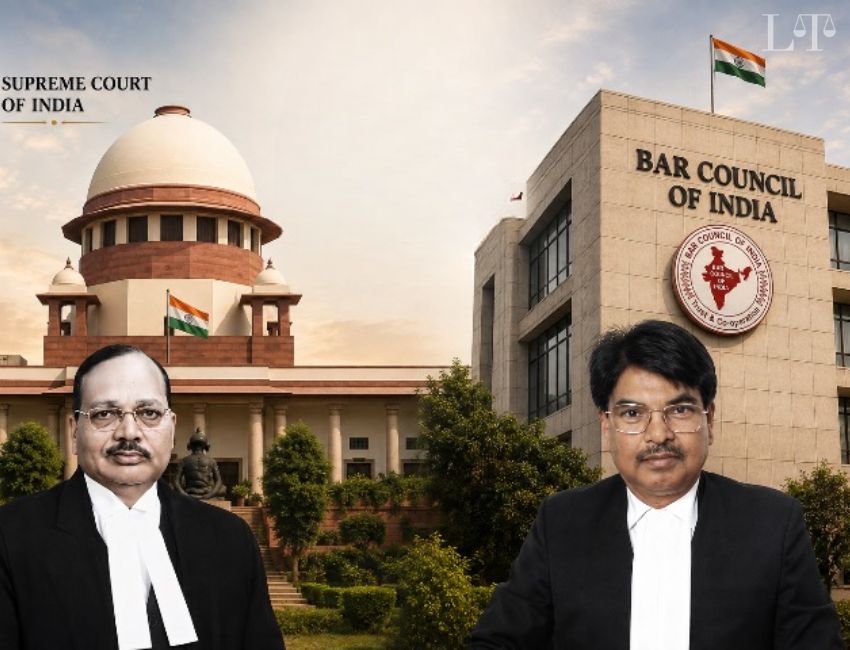
“This Is Totally Uncalled For”: CJI Surya Kant Tears Into BCI’s Enrolment Ban On Students Who Opposed Him

The Supreme Court on Friday strongly questioned the Bar Council of India (BCI) for acting against NALSAR University of Law students over their campaign related to Chief Justice of India (CJI) Surya Kant’s participation in the university’s convocation.

CJI Surya Kant and Justice Joymalya Bagchi made strong observations. The Bench criticised the BCI’s action and said students cannot be punished simply for peacefully expressing their views.

“BCI is unnecessarily taking action. If the students have a cause to protest, they have the right to protest. Students might have written a letter to me. It’s a dialogue between students and me. Who are they (BCI) to unnecessarily raise an issue? This is totally uncalled for. BCI has nothing to do with this,” CJI said.

Right to Protest

The CJI said peaceful student activism alone cannot be a reason to take punitive action. He recalled that he too had participated in student activities when he was young.

“I myself, during student days, was involved in student activities. Peacefully they are raising voice, they should be allowed. Even if they are wrong, assuming, they have the right to protest. Who can stop them? So long as they are lawfully and peacefully raising a voice, they must be heard. Why Bar Council or any other body should interfere?” CJI observed.

“Even if during the young days someone makes a statement which is wrong, let that be wrong, but why should there be an action,” CJI said.

Petition Mentioned

The observations came after Senior Advocate K Parameshwar orally mentioned a writ petition challenging action taken by BCI Chairperson Manan Kumar Mishra against the NALSAR students. Although the BCI had later withdrawn the challenged directions, Parameshwar said there were still important questions about the way the BCI Chairman had taken the action.

He said there was no sign that a BCI meeting had approved the decision, and referred to opposition from a BCI member from Kerala.

“The functioning of the Bar Council itself is a serious issue,” Parameshwar submitted.

Advocate Radhika Gautam, appearing for the BCI, told the Court that the earlier decision had already been withdrawn. However, Justice Joymalya Bagchi questioned how that decision had been made.

“Was BCI convened to take a resolution like that? We want to know,” Justice Bagchi asked.

No Punitive Action

The Bench agreed to hear the petition after it was mentioned orally. It also gave a temporary order saying that the BCI and State Bar Councils cannot take punitive action against NALSAR students or faculty members over the incidents mentioned in the Chairman’s communications about the campaign against the CJI taking part in the convocation.

Invitation to Graduates

After the order, CJI Surya Kant invited NALSAR graduates to join the Supreme Court Bar and take part in legal-aid work.

“You tell the students, get the license at the earliest. Join the Supreme Court bar. We will empanel them for legal aid cases, and let them do legal aid. This will be the befitting answer to all those who caused impediment in their career,” the CJI said.

Earlier BCI Direction

The Supreme Court stepped in a day after BCI Chairperson Manan Kumar Mishra directed all State Bar Councils not to enrol NALSAR students graduating in 2026 as advocates until further orders. The direction followed reports that some outgoing students opposed inviting CJI Surya Kant to the university’s convocation, reportedly because of his comments about student protests in Delhi.

In his communication to the NALSAR Vice-Chancellor and the State Bar Councils, the BCI Chairman stated:

“Till further orders, no student of NALSAR University of Law, who has obtained the Law Degree in the year 2026, shall be enrolled by any State Bar Council as an Advocate,”

Information Sought

The BCI also asked NALSAR to give it a verified factual report naming people who were allegedly involved in starting, organising, coordinating, or mobilising the campaign. It also asked for copies of representations, petitions, memoranda, and other communications about the CJI’s proposed participation in the convocation, along with the names of people who signed them, if those names were available in the university’s official records.

The BCI also asked for details about the role of student groups, faculty members, research scholars, alumni, and outsiders. It sought information about people who may have written or circulated material for the campaign, organised meetings, spoken to the media, or managed social media groups connected with the campaign.

“As per some reliable sources, there exists groupism and dirty politics among some of the academic staff and they have played very active role in misleading, instigating and misguiding the students. This is a very serious matter. The teachers, instead of involving themselves in their teaching job, are doing nasty politics in the campus. Bar Council of India, being the regulator of Legal Education cannot be a mute spectator of such a serious situation.”

BCI’s Reasoning

The BCI said that, at that stage, no student had been officially declared disqualified  to enrol as an advocate because they took part in the campaign. However, it said the temporary stop on enrolment was necessary because allowing enrolment while the inquiry was still ongoing could affect or defeat the inquiry. The Chairman also questioned whether people who were alleged to have shown disrespect to the country’s highest judicial office were fit to join the legal profession.

“A student of Law, having no regard or respect for the highest Judicial Office of the country, is not expected to be a responsible or sensible Advocate, Teacher or a Judge. Such persons shall always be a liability on the profession. Such conduct, reflects adversely upon the person’s suitability for entry into or association with the legal profession and is inconsistent with the dignity, discipline and ethical standards of the legal profession. Our experience is that such people are always indulged in strikes and boycotts and tarnish the image of the Legal Profession,” the Chairman said.

Ban Withdrawn

The BCI later reconsidered its decision. After discussions by the BCI Council, it withdrew the blanket restriction on enrolment of the entire NALSAR 2026 graduating batch. The Council said that most students were innocent and did not intend to take part in any move showing disrespect to the CJI.

“The Council has thoroughly discussed and deliberated over the letter issued by the Chairman, Bar Council of India to the Vice-Chancellor, NALSAR University of Law and the Secretaries of all the State Bar Councils today. After thorough discussion the Members are of the unanimous view that as per the latest report, vast majority of the students of NALSAR (2026 pass out students) are innocent and they were not inclined to take part in the move of disrespect. Accordingly, the Council modifies the order of Chairman with regard to the ban on the enrolment of the NALSAR Students with the State Bar Councils. All the students will be entitled to get enrolled with the State Bar Councils of their choice”, the order states.

Case Before the Court

The BCI has decided to wait for the factual report from the NALSAR Vice-Chancellor before considering further action against people found to have played a role in the campaign. It also said it had received reports that a small number of teachers and outsiders may have influenced or instigated students.

The BCI first stopped the enrolment of all NALSAR students graduating in 2026, but later withdrew that decision. The matter has now come before the Supreme Court.

At this temporary stage of the case, the Court has made it clear that the BCI or any State Bar Council cannot take punitive action against the students or faculty over the incidents mentioned in the Chairman’s communications.