
 By
By 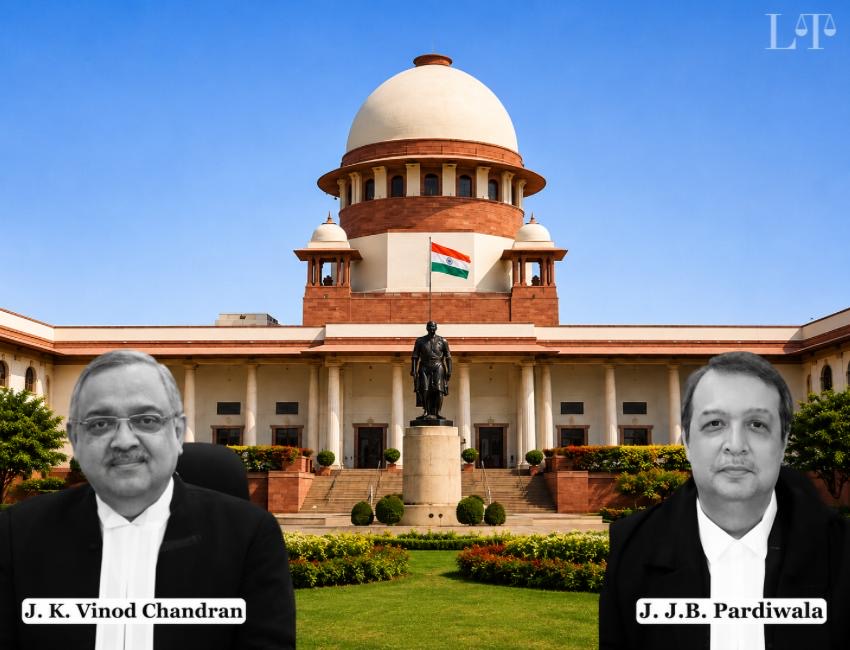
A criminal trial in Bihar had been running for nine years. The accused was already halfway through giving his own statement to the court. But the Supreme Court has now ordered the trial court to go back, because the prosecution never called the very witnesses needed to prove the case.
What the Supreme Court Said
Justices J.B. Pardiwala and K. Vinod Chandran cancelled the earlier orders from the Patna High Court and the Trial Court, and the judges remarked:
“We cannot but express a note of caution, that when there is total failure of the prosecution, the Court should with alacrity question the prosecution’s conduct in not examining crucial witnesses. The Trial Court is not a moot spectator and even in the role of an unbiased adjudicator has the responsibility to ensure that the best evidence is not suppressed by the prosecution.”
How the Case Started
The case began with a fight in which the appellant and his father were both injured. According to the prosecution’s own story:
One accused attacked the father with a spear, two others allegedly joined in with an iron rod, and a fourth accused allegedly hit the appellant on the head with a sword.
By the time police finished investigating, charges remained against only two of the four accused. The case against the other two, both women, was dropped even before the trial began.
Evidence Was Never Recorded
The trial started in 2017. Almost seven years later, on April 13, 2024, it reached the stage of questioning the accused under Section 313 CrPC. Normally, this stage only happens after all prosecution evidence has already been presented.
At this point, the appellant applied under Section 311 CrPC, asking the court to call three witnesses who had never been summoned: his own injured father, the doctor who examined the injuries, and the Investigating Officer.
Lower Courts Said No
Both the Additional District and Sessions Judge in Gopalganj and the Patna High Court rejected this request. They saw it as a delaying tactic, meant to fix gaps in a case that had already gone cold.
The appellant then approached the Supreme Court under Article 136 of the Constitution.
The Supreme Court Disagreed Strongly
The Court said it doesn’t usually step into such matters, but this case was different.
The court said:
“Normally, we would not have entertained the application under Article 136 of the Constitution of India, however, in the present case, what is projected is a clear failure of the prosecution to properly conduct the trial.”
The judges pointed out that the missing witnesses were not minor. They were essential to proving that a crime had even taken place:
“The appellant and his father were injured in the incident. The father was not examined and the other witnesses sought to be examined are the Doctor, who attended to the injured and the Investigating Officer; crucial witnesses. The absence of whom could lead to even an acquittal for reason of the shoddy prosecution carried out on the allegation of lacunae being attempted to be plugged; it is the prosecution that proffers witnesses in a trial and here, the failure is pointed out by the de-facto complainant.”
Notably, it was not the defence pointing out these gaps. It was the victim himself who did.
Both Orders Cancelled
The Court set aside both the Trial Court’s and High Court’s orders, and laid out clear next steps:
“We are unable to sustain the orders passed and set aside Annexure P4 order of the Additional District and Sessions Judge-II Gopalganj and the impugned order of the High Court. The application under Section 311 shall stand restored before the Trial Court and the prayer for examination of the injured witness, the medical officer and the Investigating Officer shall definitely be permitted.”
The Court also said the trial court should consider calling any other witnesses the prosecution may have missed:
“If any other witnesses are sought to be examined, which the prosecution has left out, as is the case of the injured witness and the medical officer, the Trial Court shall bestow its consideration to such request too,’’ stated the court.
It further explained what should happen next, including how the accused’s unfinished Section 313 statement should be handled :
“The witnesses shall be examined and proffered for cross-examination. Section 313 shall be commenced from the stage, it was stopped, ensuring that any incriminating circumstance brought out in the testimony of the witnesses now examined are also put to the accused.”
A Message for All Trial Courts
The judgment ends with a wide message for trial courts in general, not just for this case:
“The Trial Court is not a moot spectator and even in the role of an unbiased adjudicator has the responsibility to ensure that the best evidence is not suppressed by the prosecution, as in this case, where even the Medical Officer and the Investigating Officer was not examined.”
The Result
The appeal was allowed. The Court ended its order by stating:
“The appeal stands allowed with the above directions. Pending application(s), if any, shall stand disposed of.”
Case Title: Anil Singh @ Anil Kumar Singh v. The State of Bihar & Ors.