
 By
By 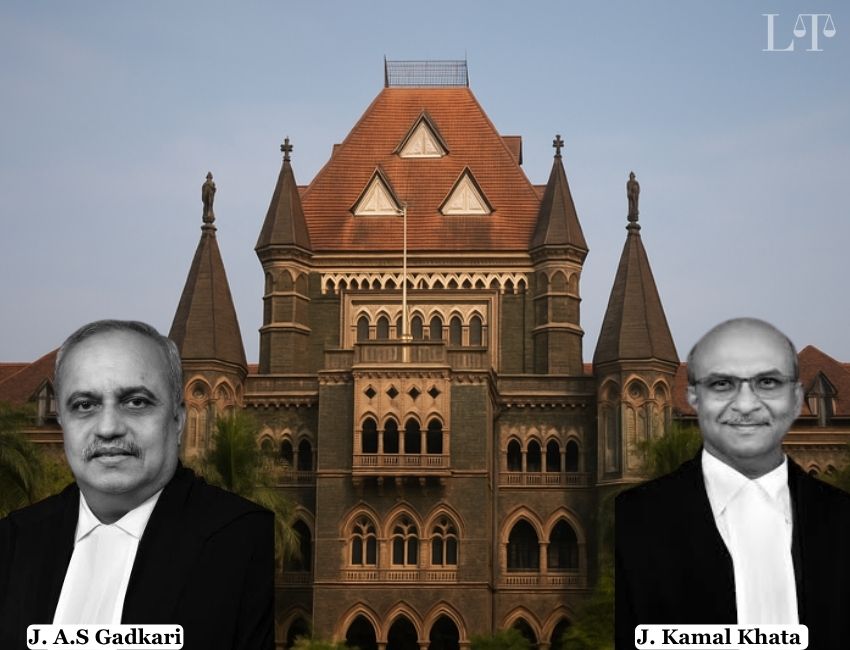
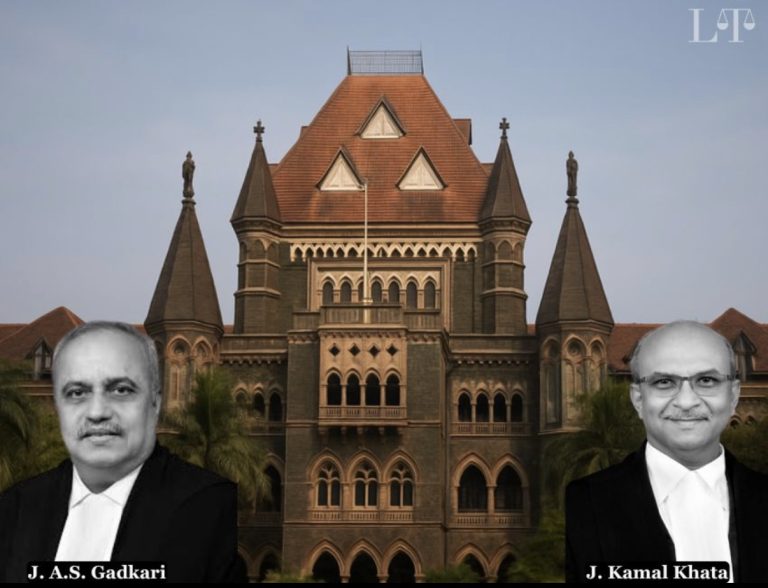
The Bombay High Court, comprising Justice A. S. Gadkari and Justice Kamal Khata, has dismissed an appeal concerning Section 105 of the Mental Healthcare Act, 2017. The Court said that this provision is meant to protect people with mental illness and cannot be used as a legal tactic against the other side in a case.
In its August 25, 2026 judgment, the Division Bench found that the case filed by the appellant against his elderly father was an afterthought and an abuse of the Court’s process. The Court upheld the Single Judge’s order and also ordered the appellant to pay ₹5 lakh as exemplary costs for unnecessarily harassing his 78-year-old father.
The Dispute
The dispute was between a son and his elderly father and arose during a partition suit that had been pending for a long time. The appellant, Jitendra Gorakh Megh, had filed the suit seeking his lawful share in their ancestral coparcenary properties.
While the suit was pending, he asked the Court to appoint an independent Medical Board under Section 105 of the Mental Healthcare Act, 2017. He wanted his father to be examined, claiming that his father was suffering from mental illness and that there were doubts about his mental capacity.
Medical Certificate
The application was mainly based on a Medical Certificate. The certificate stated that the father was diabetic and suffered from hypoglycemic episodes after taking insulin.
It mentioned symptoms such as delusions, confusion, forgetfulness and perspiration. The appellant argued that these symptoms raised a genuine doubt about his father’s mental capacity and therefore required an examination by a Medical Board under the Mental Healthcare Act, 2017.
Single Judge’s Order
The Single Judge rejected the application. The appellant then challenged this decision before the Division Bench.
He argued that the Court had not properly used its powers under Section 105 of the Mental Healthcare Act. He also said that the medical records were enough to justify sending his father for examination by a Medical Board.
The appellant further argued that withdrawing his earlier application did not stop him from filing another application under Section 105, especially since the earlier application had not been decided on its merits.
He said that the new application was based on changed circumstances and was made under a separate legal provision. According to him, only medical experts, and not the Court, could decide whether his father was suffering from mental illness.
Father’s Objection
The respondent-father strongly opposed the proceedings. He argued that the application was another attempt to involve him in multiple proceedings and harass him.
He submitted that the allegations about his mental illness were malicious and amounted to an abuse of the legal process.
Court’s Finding
After hearing both sides and examining the record, the Division Bench found no reason to change the Single Judge’s decision.
The Bench agreed that the Mental Healthcare Act had been used as a weapon in the ongoing case instead of being used to protect a person who genuinely needed protection.
The Court stressed that Section 105 of the Mental Healthcare Act is meant to protect such persons and observed:
“Section 105 of the MHA, 2017 is intended to operate as a shield for the protection of persons with mental illness and cannot be permitted to be wielded as a sword against them by an adversarial party.”
The Court said that a law made to protect and support persons with mental illness cannot be turned into a procedural weapon simply because one party wants to gain an advantage over another in litigation.
Medical Symptoms
The Division Bench also closely examined the Medical Certificate relied upon by the appellant.
The Court noted that the certificate itself stated that the father suffered hypoglycemic episodes after taking insulin. It also stated that the resulting symptoms were temporary and disappeared once his blood glucose levels returned to normal.
The Bench therefore agreed with the Single Judge that such temporary and reversible symptoms could not, at the initial stage, be treated as mental illness under the Mental Healthcare Act.
The Court specifically observed:
“episodic and reversible symptoms arising from an underlying metabolic condition cannot, prima facie, be equated with or construed as mental illness within the meaning of Section 2(1)(s) of the MHA, 2017.”
The Bench explained that, under the law, mental illness means a serious and lasting disorder that affects a person’s thinking, mood, perception, sense of direction, memory, judgment, behaviour, ability to understand reality, or ability to deal with the normal demands of daily life.
The Court further held:
“the transient and metabolically-induced systems recorded in the Medical Certificate fall manifestly short of this threshold and cannot, by any reasonable construction, be regarded as constituting mental illness within the contemplation of the MHA, 2017.”
Timing of Application
The timing of the application was another important factor for the Court.
The Medical Certificate relied upon by the appellant was already on record from July 2024. Despite this, the appellant had not alleged in the earlier proceedings that his father was mentally unstable.
The Bench found this significant because the appellant claimed that there had been a subsequent change in circumstances that justified filing the fresh application.
Earlier Proceedings
The Court noted that the parties had earlier appeared before a Division Bench. That Bench had even tried to help the father and son reach an amicable settlement by meeting them in chambers.
The settlement attempt failed. The matter was then heard and reserved for orders.
According to the Court, the appellant thereafter filed the application seeking a Medical Board examination before the earlier order was pronounced.
The Bench found that the timing of the application showed that it was not a genuine attempt to use the legal protection. Instead, it was filed to gain an advantage in the ongoing case.
The Bench observed:
“it is nothing short of an afterthought and a malicious proceeding invoked to drag the Respondent No.1 who is around 78 years old into several proceedings so that he would give up and succumb to Appellant’s demands.”
Elderly Father
The Court expressed serious disapproval of the fact that the proceedings had been brought against an elderly parent who was already suffering from various illnesses.
It made clear that the judicial process cannot be used to put pressure on an aged litigant.
The Bench observed:
“such a conduct by a son against his aged father (suffering from various illnesses) cannot be and should not be tolerated under any circumstances by this Court.”
The Court further held that the appellant had “clearly abused the process of this Court.”
Appellant’s Conduct
The Division Bench also considered the appellant’s conduct in the earlier proceedings.
The Medical Certificate was already available, but the appellant had not alleged in the earlier proceedings that his father was mentally unstable.
The Court also asked the appellant if he had any independent medical opinion or any expertise in mental health. The appellant candidly said that he had neither.
This further supported the Court’s conclusion that there was no independent medical assessment showing that the father was suffering from mental illness.
Instead, the Court found that the legal provision was used during the dispute between the parties, with the allegation being made much later even though the relevant Medical Certificate was already available.
Clean Hands
The Division Bench also referred to the settled principle that a person approaching a Court must come with clean hands.
Relying on the Supreme Court’s decision in S.P. Chengalvaraya Naidu v. Jagannath, the Court said that a person who brings a case based on false statements cannot seek relief from the Court and can have the case rejected at the very beginning.
No Appellate Interference
The Court rejected the questions raised by the appellant, finding that they were not relevant to the actual dispute based on the facts on record.
The Court held that there was no reason to interfere with the decision taken by the Single Judge.
The Bench reiterated that an appellate Court normally should not change the discretion exercised by the first Court unless that decision was arbitrary, unreasonable, perverse, or against established legal principles.
For this, the Court relied on the Supreme Court’s decisions in Wander Ltd. v. Antox India (P) Ltd. and Ramakant Ambalal Choksi v. Harish Ambalal Choksi.
The Division Bench found that the Single Judge’s order was properly reasoned and that there was no perversity that required the appellate Court to interfere.
₹5 Lakh Costs
The Court did more than just dismiss the appeal.
Considering the appellant’s conduct and the harassment caused to his elderly father, the Court ordered the appellant to pay exemplary costs of ₹5 lakh.
The Bench said that such costs are necessary to ensure that people do not benefit from filing frivolous or abusive cases.
The Court observed:
“Realistic costs must be imposed to ensure that wrongdoers are denied any profit or advantage from frivolous litigation.”
Relying on the Supreme Court’s decision in Ramrameshwari Devi v. Nirmala Devi, the Bench said that costs can play an important role in preventing the misuse of judicial proceedings.
Court’s Conclusion
The Court hoped that the ₹5 lakh costs would stop the appellant from filing more frivolous cases and misusing the Court’s process.
Case Details: Jitendra Gorakh Megh vs Gorakh Govind Megh (Appeal 70 of 2026)