
Loading...

“Sanctioned by the US, Ousted by the ICC: Karim Khan’s Fall From Power”

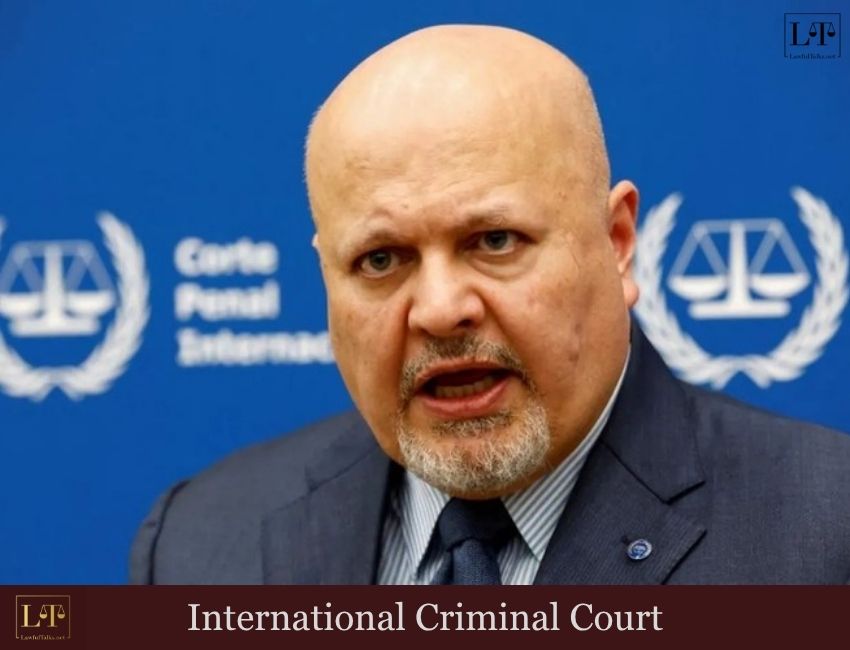
Karim Khan was  the International Criminal Court’s (ICC) third chief prosecutor. He was elected in 2021. Now he has been removed from his job.

Members of the court voted 82 in favor of removing him. This came after allegations that he sexually misbehaved.

The court’s oversight body looked into the matter. In June, they said Khan committed a “serious breach of duty and serious misconduct.” They said he had an improper sexual relationship with a junior staff member at the ICC. They also said he tried to stop her from making a formal complaint about it.

Khan denies all the allegations. His lawyer said Khan will challenge “the lawfulness and fairness of the decision through all available legal mechanisms.” It is not yet clear what legal options are still available to him.

After the vote, the ICC released a statement. It said the Court “took note” of the decision made by the Special Session of the Assembly of States Parties — this is the group of 125 member countries that voted to remove Khan. The statement also said: “The Court will continue to attach the utmost importance to maintaining a safe, inclusive, and respectful working environment for all personnel.”

A Bigger Story for the ICC

This isn’t just about Khan. The whole episode has put the ICC in the spotlight. The ICC is the only permanent court in the world that deals with war crimes. What happens next could change the way the ICC works.

The investigation into Khan has caused divisions inside the ICC. It has drawn heavy public attention. And it comes at the same time that critics are trying hard to weaken or even shut down the ICC entirely. People who support the court are worried. They fear the court could become weaker because of this. They also worry it may become less able to handle the world’s most serious crimes.

About Khan

Khan is a well-known British lawyer. He has been on voluntary leave since May 2025 while he fought the allegations. He is also currently barred from practicing law in the UK, while the Bar Standards Board looks into his case.

He could not attend the vote in New York, which took place at the UN headquarters. This is because he is banned from entering the United States. The Trump administration placed sanctions on him after the ICC opened an investigation into alleged war crimes by Israeli officials in Gaza.

Timeline of the Misconduct Case

  • May 2024: A third party first reported allegations of sexual misconduct involving a female staff member to the ICC.
  • The court’s Independent Oversight Mechanism (IOM) opened an investigation.
  • The IOM later closed the case after the woman who made the complaint chose not to take part.
  • Investigators said there wasn’t enough evidence at that point to support the claims.
  • Some critics said this early investigation was handled badly, and it hurt trust in the IOM.
  • October 2024: A second complaint was made. This moved the case to the United Nations Office of Internal Oversight Services (OIOS).
  • November 2024 to December 2025: OIOS carried out a much bigger investigation. They gathered more than 5,000 pages of evidence and witness statements.
  • A panel of three judges reviewed the OIOS findings. Their job was to decide whether Khan’s actions counted as serious misconduct, less serious misconduct, or no misconduct at all.

Outside Pressure on the ICC

All of this is happening while the ICC faces huge pressure from outside, and while global tensions are running high.

The United States placed sanctions on Khan after he asked for arrest warrants for Israeli Prime Minister Benjamin Netanyahu and former Israeli Defence Minister Yoav Gallant. This was over alleged crimes connected to the war in Gaza. Since then, the US government’s attitude toward the ICC has become more and more hostile.

Earlier this month, the US announced a new “whole-of-government” plan aimed at dismantling the ICC “brick by brick.” US officials called the court a threat to American sovereignty. They promised to use visa bans, asset freezes, and diplomatic pressure to push other countries to leave the ICC or refuse to accept its authority over their citizens.

The United States, Russia, and Israel are not members of the ICC. However, the court can still claim legal authority over crimes committed by citizens of these countries if the crimes happen on the territory of a country that is an ICC member.
Batons, Blackouts, Barred Data: SC Orders Students Freed, Locks Down the Evidence

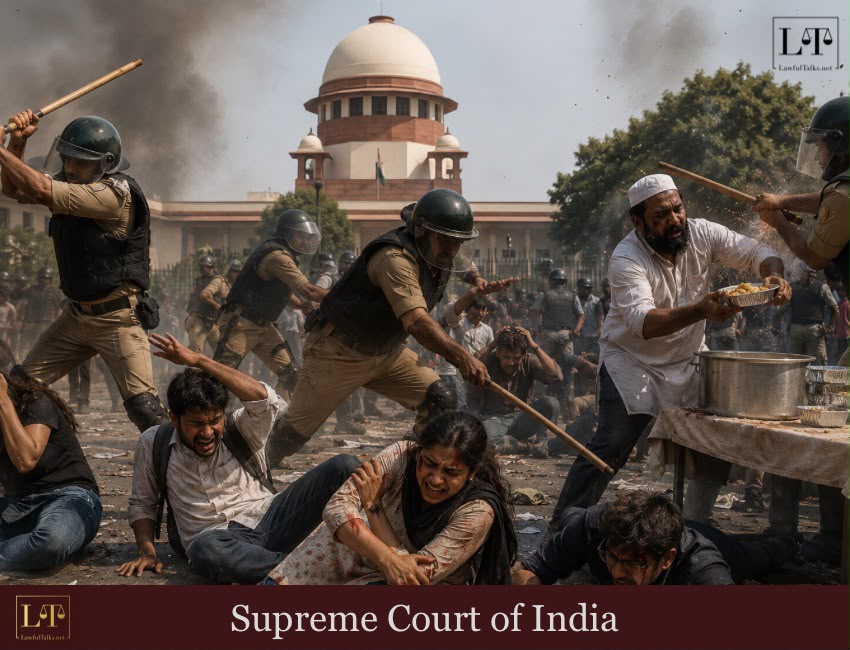
The Supreme Court today said that allegations about injuries to students and police personnel during nationwide student protests last week need a fair and independent investigation.

SIT may be formed:

The Court said it was considering setting up a Special Investigation Team (SIT), led by a former Supreme Court Judge, to investigate the matter. It also asked the Union Government and the States of Assam, Bihar, West Bengal, Uttar Pradesh, Madhya Pradesh, Maharashtra and Kerala to respond.

Students to be released:

In addition, the court issued several interim directions. It ordered the release of all students arrested or detained for taking part in the protests, as long as they have no criminal antecedents.

Evidence must be saved:

The Court further directed that all CCTV footage, drone recordings, body-worn camera footage, wireless communication records and PCR logs related to the protests must be preserved.

Data must stay private:

The States were also told to protect the personal information and digital data of student protesters. This information must not be made public for now. The Court specifically said that the protesters’ personal details must not be disclosed or published.

No action against students:

The Court also ordered that no coercive action should be taken against students in connection with the protests, as long as they do not have any criminal antecedents.

What the case is about:

A Bench of Chief Justice of India Surya Kant, Justice Joymalya Bagchi and Justice V. Mohana heard several petitions. These petitions alleged police brutality against student protesters across the country. The students have been protesting since July 20 against examination paper leaks and other systemic irregularities. The Bench also heard petitions filed for injured police personnel and media members.

Court’s view:

The Bench observed that “the allegations made by petitioners prima facie make out a case for an independent and fair probe. Such a probe will effeticely address allegations…”

Senior Advocate Gopal Sankaranarayanan, appearing for writ petitioner Shailendra Mani Tripathi, said the issue was not limited to police action during the protests in Delhi. He said it also included incidents that happened across the country.

Right to protest:

“Right to peaceful, lawful protest absolutely guaranteed under Constitution. So long as it is peaceful agitation, merely because there is agitation, there can’t be [excess]…If there is excess committed, it should be independently examined. It’s not only a case of Delhi. Uniformity in protocol required. Merely because agitation there, doesn’t mean lathi-charge. Discipline integral to democratic process.” CJ Kant orally observed.

Police safety:

The Court also indicated that it may ask the States and Union Territories to explain why police personnel handling large demonstrations did not have enough protective equipment, such as helmets.

Earlier hearing:

Last Friday, Senior Advocate Gopal Sankaranarayanan mentioned the matter before a Bench led by CJI Kant. He referred to the ongoing protests and reported cases of excessive police force, and asked for an urgent hearing. The Chief Justice said the case would be considered.

First petition:

Earlier, on July 22, the Chief Justice had refused to hear a letter petition about the alleged use of police force during the July 20 protest at Jantar Mantar. Advocate Narendra Mishra had mentioned the matter. Later, the Chief Justice clarified that the request for listing was declined because no properly filed petition was pending before the Court at that time.

One petition was filed by Advocate Shailendra Mani Tripathi through Advocate-on-Record Chand Qureshi. It seeks directions to regulate police action during public demonstrations. Among other requests, it seeks a ban on using plainclothes personnel for crowd-control duties, guidelines for using prohibitory orders under Section 163 of the BNSS, and an independent investigation into police action during the July 20 student protest in Delhi.

First petition

One of the petitions, filed by Advocate Shailendra Mani Tripathi through Advocate-on-Record Chand Qureshi, seeks directions to regulate police action during public demonstrations. Among other reliefs, it seeks a prohibition on the deployment of plainclothes personnel for crowd-control duties, guidelines governing the invocation of prohibitory orders under Section 163 of the BNSS, and an independent investigation into the police action during the July 20 student protest in Delhi.

Claims of force:

According to the petition, the cause of action arose from events on July 20, 2026. On that day, students and other citizens marched towards Parliament to protest issues related to the education system and demand the resignation of Union Education Minister Dharmendra Pradhan.

The petition says the demonstration faced heavy police deployment, barricading, tear gas shelling, baton charges and large-scale detentions. It also says protesters were physically assaulted, female demonstrators faced gender-based misconduct, and force was used by unidentified or plainclothes personnel.

The petition claims that at least 60 protesters were injured during the police action and says these allegations need an independent and impartial investigation.

Other disruptions:

The petition also says that suspension of metro services and internet shutdowns during the protests disrupted the daily lives of commuters, office-goers, students and patients. It says these actions also affected access to banking facilities, telemedicine, remote work and emergency services.

Jha’s petition:

Another petition was filed by Rajya Sabha MP Manoj Jha. It seeks directions to States and Union Territories to register FIRs over allegations of police brutality and disproportionate use of force against peaceful protesters between July 20 and July 25 in different parts of the country. It especially refers to the events at Delhi’s Jantar Mantar on July 20.

Demand for state SITs:

This petition also seeks the setting up of a Special Investigation Team in the concerned States and Union Territories. The SIT should include the Director General of Police and two senior women IPS officers, not below the rank of Inspector General of Police. To ensure that the investigation is credible and impartial, the petition asks that it be conducted under the guidance of a retired High Court Judge and monitored by the Supreme Court. The petitioner has also asked that the investigation be completed within three months.

Jha has also asked the States and Union Territories to preserve all videos on social media that allegedly show the disproportionate use of police force. He has also sought preservation of records identifying personnel deployed during the protests, including those in plain clothes.

More complaints:

An advocate has also moved the Supreme Court, alleging that Delhi Police officials assaulted and verbally abused him when he went to Nizamuddin Police Station on July 23 to secure the release of students detained in connection with the Jantar Mantar protests.

A separate petition was recently filed by Junaid Malik, a volunteer who was distributing food during the Jantar Mantar protests. He alleges harassment by police officials.

Case Details: Shailendra Mani Tripathi v. Union of India & Ors., Diary No. 44078/2026 (and connected cases).

“Convert to Christianity, Lose Your SC Status: Supreme Court Refuses to Revisit Its Ruling”

The Supreme Court has dismissed a review petition challenging its March 2026 judgment which held that a person loses Scheduled Caste (SC) status upon converting to any religion other than Hinduism, Sikhism or Buddhism.

Court’s decision:

A Bench of Justice Prashant Kumar Mishra and Justice Manmohan observed that it found no reason to revisit its earlier ruling after examining the review petition.

“We have gone through the Review Petition and perused the judgment dated 24.03.2026 which has been sought to be reviewed. There is no error apparent on the record,” the Bench said.

No oral hearing:

The Court also dismissed the petitioner’s request for an oral hearing.

Earlier ruling:

In its March 2026 judgment, the Supreme Court had ruled that a person who converts to Christianity or any religion other than Hinduism, Sikhism or Buddhism immediately ceases to enjoy Scheduled Caste status.

All conditions needed:

However, the Court clarified that such a person may get back Scheduled Caste status after reconverting to Hinduism, Sikhism, or Buddhism, but only if all three conditions below are met:

The Court prescribed the following requirements:

  • The individual must prove that they were originally born into a caste recognised as a Scheduled Caste;

  • They must establish a bona fide reconversion to Hinduism, Sikhism or Buddhism and demonstrate complete renunciation of the previously adopted religion; and

  • They must show that they have been accepted back by members of their original caste community.

The Court further clarified that if even one of these conditions is not met, the claim to restore Scheduled Caste status cannot succeed.

How the case began:

The matter originated from an incident involving a man from Andhra Pradesh who was born into a Scheduled Caste but later converted to Christianity and became a pastor. He had lodged an FIR under the Scheduled Castes and Scheduled Tribes (Prevention of Atrocities) Act, alleging that he was abused by his caste name and criminally intimidated.

High Court ruling:

The accused persons subsequently approached the Andhra Pradesh High Court, which quashed the FIR after concluding that the complainant, having embraced Christianity, was no longer entitled to claim Scheduled Caste status under the law.

Appeal to Supreme Court:

Aggrieved by the High Court’s decision, the complainant filed an appeal before the Supreme Court.

SC/ST Act protection:

In its March 2026 verdict, the Supreme Court affirmed the High Court’s ruling, holding that a person professing Christianity cannot seek protection under the SC/ST Act, as Scheduled Caste status is constitutionally recognised only for persons professing Hinduism, Sikhism or Buddhism.

Court’s finding:

“Therefore, we are of the view that the High Court was right in holding that the appellant has ceased to be a member of the Scheduled Caste on his conversion to Christianity. Accordingly, the appellant cannot be a person aggrieved under the SC/ST Act”

The Court nevertheless clarified that an individual who subsequently reconverts to any of these three religions may reclaim Scheduled Caste status, but only upon fulfilling all three conditions specified in the judgment.

Judgment remains:

Accordingly, with the dismissal of the review petition, the Supreme Court’s March 2026 judgment continues to remain in force.

Case Details: Chintada Anand vs State of Andhra Pradesh & Ors. (Criminal Appeal No. 1580/2026)