
 By
By 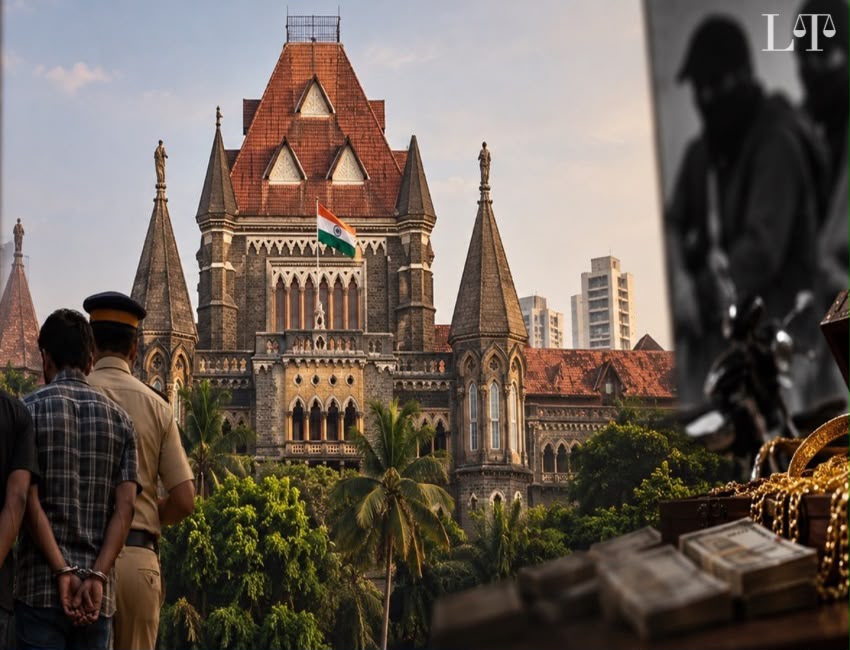
The Bombay High Court has held that a person’s caste, tribe or community can never be treated as incriminating material, and no negative conclusion can be drawn from it.
The Court observed that the prosecution must rely only on evidence that is legally allowed. Even so, it rejected the bail applications of three accused who were booked under the Maharashtra Control of Organised Crime Act (MCOCA).
The Case Details:
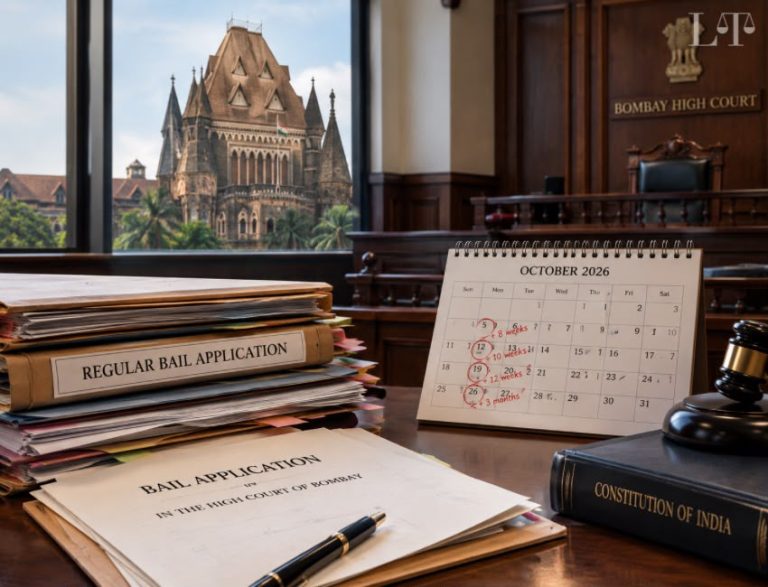
Justice Hiten S. Venegavkar heard the bail applications. The case was registered under Sections 309(6), 310(2), 324(4) and 3(5) of the Bharatiya Nyaya Sanhita, 2023, and Sections 3(1)(ii), 3(2) and 3(4) of the MCOCA.
What the Prosecution Said:
The prosecution said four masked persons forced their way into the informant’s house, attacked the people inside, took gold ornaments, cash and other items, and ran away with the informant’s motorcycle. The FIR was first registered against unknown persons. The accused were identified later during the investigation.
The Applicants’ Argument:
The applicants said they were named in the case only because they belong to the Pardhi community. They also argued that their past offences, including allegations of petty theft, did not prove that they were part of an organised crime gang or that they were continuing to commit crimes to make money.
Role of FIRs and Charge Sheets:
The Court said that just because several FIRs were first registered against unknown persons, the charge-sheets filed later still matter. But having many FIRs is not enough on its own. There must also be proper charge sheets, the court taking cognizance, and material showing a link with the alleged gang.
The Court said the main question was whether the legal conditions were met for showing that the unlawful activity was continuing and that the accused were linked to the alleged gang.
The Court said the main question was whether the legal conditions were met for showing that the unlawful activity was continuing and that the accused were linked to the alleged gang. It said:
“Therefore, the mere circumstance that several FIRs were initially registered against unknown persons does not make the subsequent charge-sheets irrelevant. Equally, registration of numerous FIRs by itself cannot replace proof of qualifying charge-sheets, cognizance and nexus with the syndicate.”
Identification of the Accused:
The Court agreed that the accused were identified only after the FIR was filed against unknown persons, so this identification needed to be checked carefully. But the Court also gave a warning. It said:
“…the FIR was admittedly against unknown persons. That circumstance requires careful scrutiny of the subsequent identification, but it does not by itself render the identification unacceptable.”
Witness Identification:
The Court also noted that not all witnesses had identified every applicant. It said this affects how much value the identification carries, and it will have to be examined during the trial. It said:
“That is a matter affecting the weight of the evidence and will have to be tested at trial.”
The Discrimination Claim:
On the claim that the applicants were implicated because they are Pardhi, the Court said:
“A person’s caste, tribe or community can never constitute incriminating material and no adverse inference can be drawn from it. The prosecution must stand or fall only on legally admissible evidence.”
However, the Court held that the claim of discrimination did not have enough material behind it to overturn the identification, the charge sheets and the alleged link among the accused. The applicants can still present their defence during the trial by questioning the witnesses and the investigating officers.
Strict Bail Conditions:
The Court also held that the conditions for bail under Section 21(4) of the MCOCA were not met. The Court could not say it had good reason to believe that the applicants were not guilty, or that they would not commit another offence if released on bail. The Court stressed that these rules must be followed and cannot be skipped, and said:
“At the same time, the twin conditions cannot be diluted or omitted from consideration.”
Time Spent in Custody:
The Court took note of how long the applicants had been in custody, that the investigation was complete, and that charges had not yet been framed.
But it held that these facts were not enough to override the bail restrictions under the MCOCA. It said:
“However, the custody undergone till now, when viewed against the nature of the accusation and the material presently available, is not by itself sufficient to override Section 21(4).”
Directions for a Fast Trial:
While rejecting all three bail applications, the Court told the Special Court to try to frame charges as quickly as possible, preferably within four weeks of receiving the order, and to try to finish the trial within one year.
It also said the applicants may apply for bail again if the trial does not make real progress in that time for reasons that are not their fault.
Caution on the Court’s Remarks:
The Court also warned against treating its comments at the bail stage as final findings, saying:
“These observations are only for deciding the present applications. The trial Court shall evaluate the evidence independently and shall not treat any prima facie observation in this order as a concluded finding.”
So the Court rejected all three bail applications and directed the trial court to give priority to the proceedings.
Case Title: Shrihari Hardas Chavan v. State of Maharashtra [Bail Application No. 812 of 2026] and Connected Matters.