
 By
By 
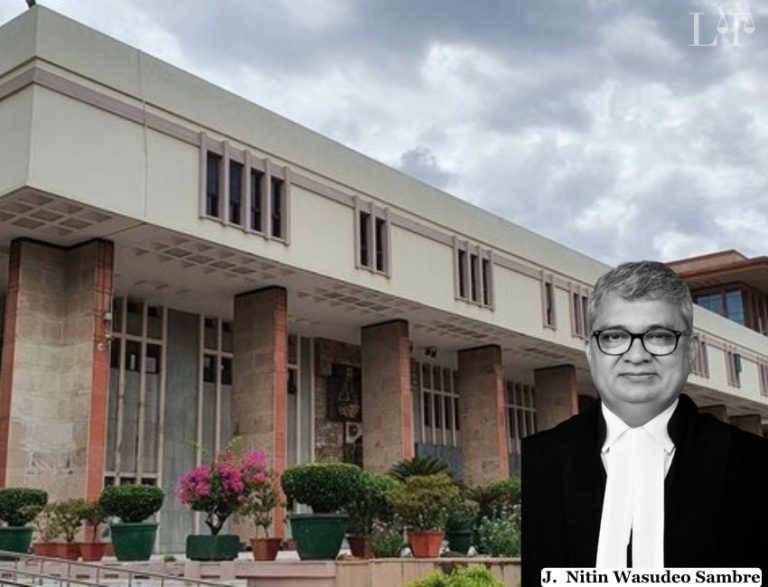
The Kerala High Court has held that a Muslim woman can use ‘khula’ to end her marriage without the consent or acceptance of her husband. A Division Bench of Justice J. Nisha Banu and Justice Shoba Annamma Eapen observed that ‘khula’ is a right available to the wife for dissolution of marriage. They said its validity does not depend on the husband’s consent.
The Case:
The case arose from a marital dispute between a husband and wife whose marriage was solemnised on December 25, 2023, through ‘nikah’ in accordance with Islamic religious rites. The wife later approached the Family Court, Malappuram, and asked for a declaration of ‘khula’.
The husband opposed this. He went to the Family Court, Tirur, and asked for a declaration that the ‘khula’ was void. He also asked for the return of a diamond ornament and compensation for mental agony.
Before the Family Court, the husband asked for permission to challenge the validity of the ‘khula’ through a detailed inquiry. He wanted to produce documents and question witnesses.
He also asked the court to put the wife’s proceedings on hold. The Family Court dismissed these applications, so he went to the High Court. He argued that he should get a chance to challenge the wife’s claim and present evidence about the validity of the ‘khula’.
What the Parties Argued:
The husband said the Family Court did not properly consider two Supreme Court decisions, Shamim Ara v. State of U.P. and Shayara Bano v. Union of India. Based on these, he argued that ‘khula’ should be pleaded and proved. He said he should be allowed to challenge it by producing evidence and questioning witnesses.
The wife relied on two Kerala High Court decisions, X and Others v. Y and Others and Asbi K. N. v. Hashim M. U. She argued that a detailed inquiry into ‘khula’ was neither necessary nor allowed. She also said that if the husband had a complaint, he could challenge the declaration of ‘khula’ in a proper proceeding under law.
How the Court Looked at ‘Khula’:
The High Court said the Supreme Court cases the husband relied on were about instant talaq, also called triple talaq. The Supreme Court had declared that practice unconstitutional. The Bench held that ‘khula’ is different.
The Court referred to its earlier decisions. It noted that ‘khula’ is a one sided form of ending a marriage and that the Family Court’s inquiry in such cases is limited.
The Court observed:
“…this Court reiterated that scope of inquiry before the Family Court is limited, and that the Family Court is only required to record ‘khula’ to declare the marital status of the parties after due notice to other party, and that if any person wants to contest the effectiveness of ‘khula’ or ‘talaq’, it is open for such aggrieved person to contest the same in appropriate manner known under law.”
The Court also mentioned the conditions set out earlier for a valid ‘khula’:
- The wife must make a declaration ending the marriage.
- She must offer to return the dower or other material gain she received during the marriage.
- There must be an effective attempt at reconciliation before the declaration of ‘khula’.
Husband’s Consent Is Not Needed:
The Bench made it clear that the husband cannot stop his wife from using her right to end the marriage through ‘khula’.
The Court observed:
“The husband cannot refuse to accede to the request of the wife. The validity of ‘khula’ does not depend upon the acceptance or consent of the husband; rather, it constitutes a right available to the wife for dissolution of the marriage.”
The Court also explained that ‘khula’ is a form of divorce for the wife, similar to the ‘talaq’ available to the husband.
The Court noted:
“‘Khula’ is the form of divorce conferred upon the wife similar to ‘talaq’ conferred upon the husband. The recognition of ‘khula’ as a form of divorce is directly available from the Holy Quran.”
The Bench held that the Family Court only needs to check whether the conditions from the earlier judgment have been met.
No Detailed Inquiry Needed:
The High Court rejected the husband’s demand for a detailed inquiry into the wife’s ‘khula’ proceedings. It held that such an inquiry is neither needed nor wanted when the Family Court is only asked to approve a divorce that happened outside court and to declare whether the couple is married or not.
The Court held:
“In view of the observations as above, we are inclined to follow the judgments in X (supra), Asbi (supra), Sudheer (supra) and Muhammed Ashar K. (supra), and hold that a detailed inquiry is neither essential nor desirable in a proceeding initiated by either of the parties for endorsement of an extrajudicial divorce.”
The Bench added that the Family Court only has to decide whether the three conditions for ‘khula’ have been met.
So the High Court found no reason to interfere with the Family Court’s orders and dismissed the husband’s original petition.
Case Details: Kuriyodath Musabah v. Isra Askar Parappan (OP (FC) NO. 375 OF 2026)