
 By
By 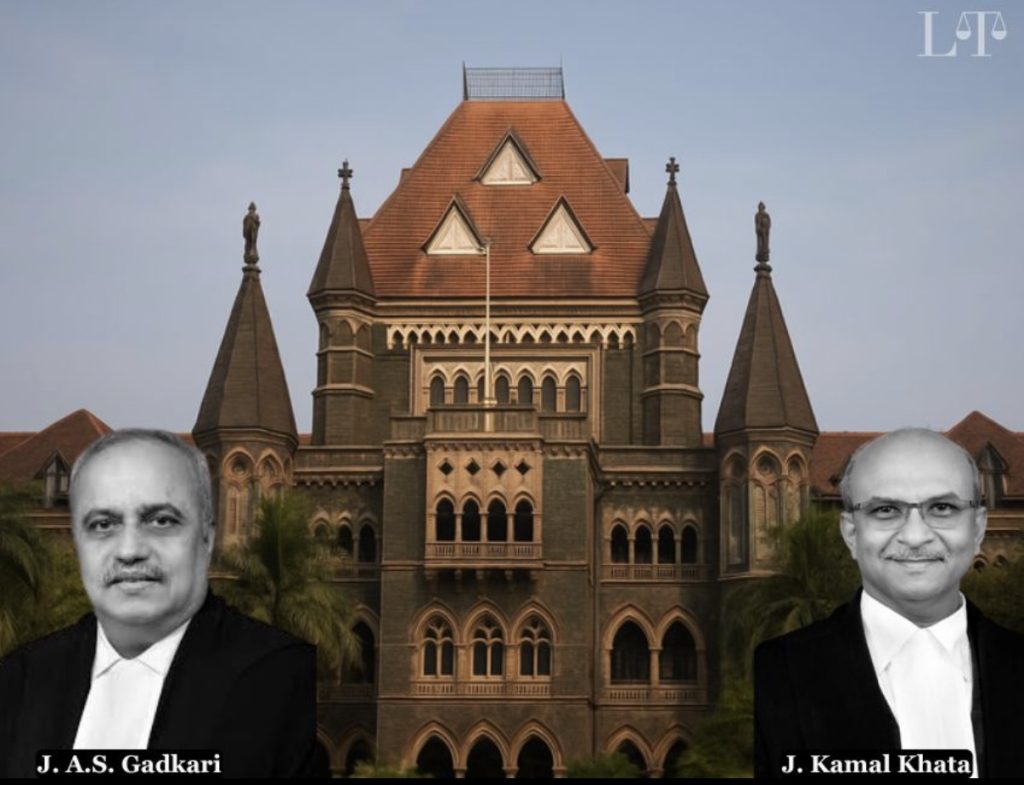
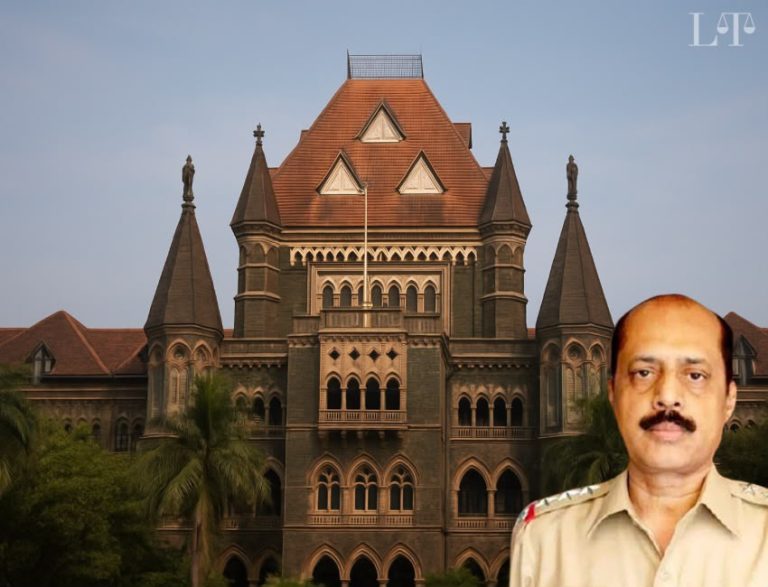
A Division Bench of the Bombay High Court comprising Justice A. S. Gadkari and Justice Kamal Khata observed that the Investigating Officer, prima facie, exceeded his jurisdiction to help the accused and tried to overreach the Court.
The case began with a petition asking for the investigation into a crime registered at Chembur Police Station, Mumbai, to be transferred. The petitioner was unhappy with how the investigation was being done and how slowly it was moving.
The Court recorded, “This is yet another case wherein the Investigating Officer (Mr. Anand Shahane) has exceeded his jurisdiction, prima facie with a view to help the accused person and has sought to overreach this Court.”
Background
The petition was filed on 30 June 2026. The informant and petitioner wanted the investigation transferred because they were not happy with its slow pace and manner. The petitioner’s case was that the investigation was being done in a most lackadaisical manner only to benefit the accused.
The Court recorded that the investigation began on 2 April 2026 but was still not complete even by 1 September 2026. The Investigating Officer then filed a ‘C-Summary Report’ on 15 September 2026.
This was one day before the petition was to be heard on 16 September 2026, and after the Court had expressed its mind on 1 September 2026.
The allegations
The case is about the caste certificate of Respondent No. 6. The Court recorded that his caste validity certificate, which declared him a Hindu (Mahar), had been declared invalid by the Caste Scrutiny Committee.
The Supreme Court upheld that order declaring the certificate invalid. It was alleged that, on the same and/or similar facts, Respondent No. 6 then got a caste certificate saying he was a Buddhist (Mahar).
The FIR contained serious allegations under Sections 406, 420, 465, 466, 467, 468, 469, 470 and 471 of the Indian Penal Code, 1860.
How the C-Summary Report was filed:
The Court then looked at the circumstances around the filing of the C-Summary Report. On 1 September 2026, the learned A.P.P. asked for time to take instructions from Respondent No. 4, and the matter was adjourned to 16 September 2026.
The Court noted that the investigation had started on 2 April 2026 but was not complete even by 1 September 2026. After the Court expressed its mind on 1 September 2026, the Investigating Officer acted quickly and filed the C-Summary Report on 15 September 2026, just a day before the hearing on 16 September 2026.
The Investigating Officer was present in Court on 1 September 2026 and knew the matter had been adjourned to 16 September 2026.
The Court further recorded that on 1 September 2026, the Investigating Officer did not tell the Court that the investigation was practically complete or that he was about to file a Summary Report.
Even on 16 September 2026, the filing of the C-Summary Report was not brought to the Court’s notice. So, no reference to the filing was made in the order dated 16 September 2026.
What the Court found in the report:
The C-Summary Report was filed under Rule 219 of Chapter V of the Bombay Police Manual, 1959, and ran to more than 500 pages. After reading it, the Court recorded that the Investigating Officer seemed to have simply repeated the findings of the Caste Scrutiny Committee in his conclusions.
The Court recorded that he had not done any effective investigation into the informant’s allegations about getting monetary benefits and other relevant matters.
The Court further observed, “A further perusal of record prima facie indicates that, the Investigating Officer in fact has not carried out any investigation and has deliberately taken all steps to protect the interest of Respondent No.6. This is wholly unconscionable.”
The State’s explanation:
The learned A.P.P. said the filing of the C-Summary Report may have been brought to the Court’s notice on 16 September 2026 because the then A.P.P. had written a letter to the Joint Commissioner of Police about transferring the investigation.
The A.P.P. also said that on 8 September 2026, on the orders of the Joint Commissioner of Police, Mumbai, the investigation was transferred from P.I. Anand Shahane to the In-charge Police Inspector, Unit 6, Crime Branch, Mumbai.
The Senior Police Inspector of Chembur Police Station was told to send all documents to the newly appointed Investigating Officer.
The Court then recorded that, after the investigation was taken away from P.I. Anand Shahane, he immediately filed an application before the jurisdictional Magistrate asking for the return of the Summary papers.
He did this even without filing an application to withdraw the Summary Report before the Magistrate. The Court did not accept the State’s explanation.
Judicial record cannot be disputed:
On the question of what happened before the Court, the Bench relied on the Supreme Court decision in State of Maharashtra v. Ramdas Shrinivas Nayak and Another.
The Supreme Court’s observations quoted in the order said, “Matters of judicial record are unquestionable. They are not open to doubt. Judges cannot be dragged into the arena.”
The judgment also said, “Judgments cannot be treated as mere counters in the game of litigation.” The principle noted was that what a judgment says happened in Court cannot be challenged by statements made at the Bar, affidavits or other evidence.
The Court further recorded that if a party believes something was recorded wrongly in a judgment, the right step is to point out the mistake to the same judges who wrote the record, while the matter is still fresh in their minds.
The order records the Supreme Court’s conclusion that “If no such step is taken, the matter must necessarily end there.”
The application for withdrawal:
The learned A.P.P. also said that P.I. Anand Shahane had filed an application on 18 September 2026 before the jurisdictional Magistrate, asking to withdraw the papers of the C-Summary Report, but that the application had not been processed.
The Court recorded that this was yet another step taken by the Investigating Officer to favour Respondent No. 6 and overreach the Court.
The Bench observed, “We fail to understand as to how the papers of ‘C-Summary Report’ can be withdrawn once those are taken on record by the Magistrate particularly without there being an Order permitting withdrawal of ‘C-Summary Report’ as contemplated under the law.”
Investigating Officer’s Conduct:
The Court then looked at the Investigating Officer’s conduct as a whole. The Bench recorded, “It prima facie appears to us that, the concerned Investigating Officer has dishonestly taken the aforesaid steps only with a view to favour Respondent No.6 and none else.”
The Court further recorded, “According to us, filing of such ‘C-Summary Report’ is an orchestrated attempt only to frustrate the Petitioner’s remedy and overreach the process before this Court and nothing else.”
The Court also asked how the C-Summary Report could have been filed when the FIR had specific allegations under Sections 466, 467 and 468 of the Indian Penal Code, 1860.
The Bench noted that the allegations in the FIR were clear and that the Caste Scrutiny Committee, the High Court and the Supreme Court had all passed orders about Respondent No. 6.
The Court recorded, “We are thus led to conclude that, prima facie, Mr. Anand Shahane, with a view to facilitate Respondent No.6, has filed the said ‘C-Summary Report’ before the concerned Magistrate and thereby frustrate the remedy available to the Petitioner.”
Directions:
Based on the facts and observations in the order, the Court directed that the matter be brought to the notice of the Commissioner of Police, Mumbai.
The Commissioner was told to file a detailed affidavit in reply to the petition, dealing specifically with each allegation and with the points recorded in the order.
The Court also told the Commissioner not to hand over the task of filing the affidavit to any junior officer, and to read the entire record before filing the reply.
The learned A.P.P. stated that the Commissioner of Police, Mumbai would file the affidavit in reply within three weeks. The Court accepted this statement and directed that the matter be listed on 21 October 2026.
Case Details: Chitra Salunke V/s. State of Maharashtra & Ors, WRIT PETITION NO. 3390 OF 2026