
 By
By 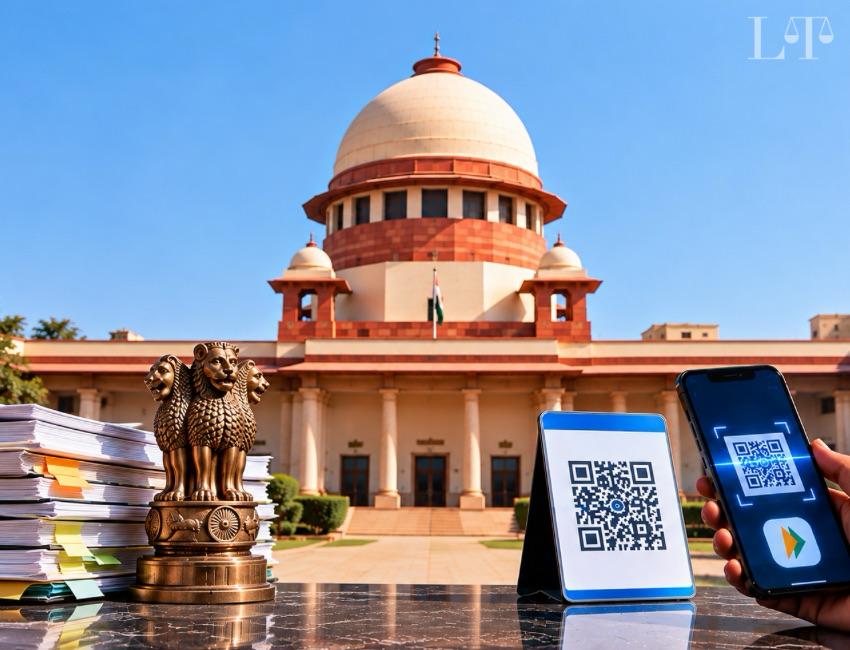
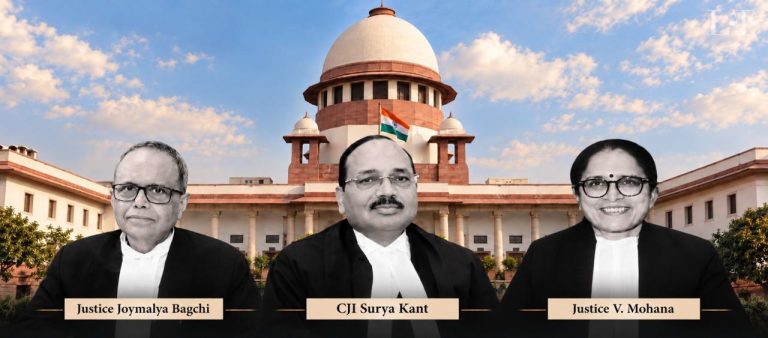
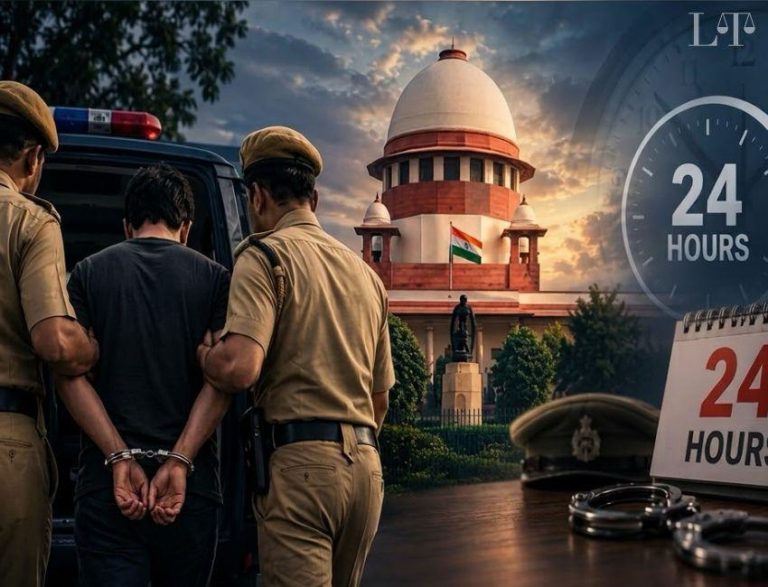
The Supreme Court has asked the Union Government to file an affidavit explaining why it wants to charge fees on UPI (Unified Payment Interface) payments above ₹2,000 made by individuals to merchants. The Bench had Chief Justice of India Surya Kant, Justice Joymalya Bagchi, and Justice V. Mohana. The Court did not stop the notifications from coming into effect.
Background
The case started with a writ petition filed by Advocate Anjan Datta. He has named the Union Government, the Reserve Bank of India (RBI), the National Payments Corporation of India (NPCI), and the UPI & Services Steering Committee as respondents.
He is challenging two Gazette notifications issued by the Union Ministry of Finance on September 14 and 15. These notifications set up a framework that allows Merchant Discount Rate (MDR) charges on business UPI payments above ₹2,000.
The petitioner argues that if businesses pass these costs on to customers, the public will be affected more widely. He also says the decision could lead to more black money transactions.
Most Transactions Stay Free:
Additional Solicitor General N. Venkataraman, appearing for the Union, said the charges will start on October 15. He said 96% of transactions will not be charged. He added that charges for essential services are capped at ₹5. He said:
“It is neither a tax nor a fee.”
The ASG said the Central Government is not taking even a single rupee from these charges. He explained that it is a settlement fee between banks and payment aggregators, needed to keep the digital system running well.
Court Asks Why the Charge Is Allowed:
Chief Justice Surya Kant asked the Union to put its stand on record and said:
“We need these facts on affidavit. It’s more of a technical issue.”
Justice Joymalya Bagchi questioned what authority the government has to do this. He asked:
“Is it tax or a fee? If not a fee, what is the executive basis for making this expropriation? What is the service?”
Justice Bagchi also referred to Section 269SU of the Income Tax Act, which requires certain specified merchants to offer electronic payment facilities. He asked further:
“269 permits a transfer…if it permits transfer, so cash from one assessee moves to another…then what is the character of receipt. In UPI who gets it?…: We are not on the [coverage]. We are on legal incidence. What is the source of legal incidence of this?”
Notice Issued, No Interim Stay
The Bench issued notice to the Centre, the RBI, and the NPCI. The petitioner’s lawyer asked for an interim stay on the ground that the move could increase black money transactions. The Court refused to stay the decision.
Case details: Anjan Datta v. Union of India & Ors. (W.P.(C) Diary No. 57387/2026)