
 By
By 
The Bombay High Court at Goa has questioned the Election Commission of India (ECI) over the manner in which voters who have changed their residential addresses are being treated during the ongoing Special Intensive Revision (SIR) of electoral rolls.
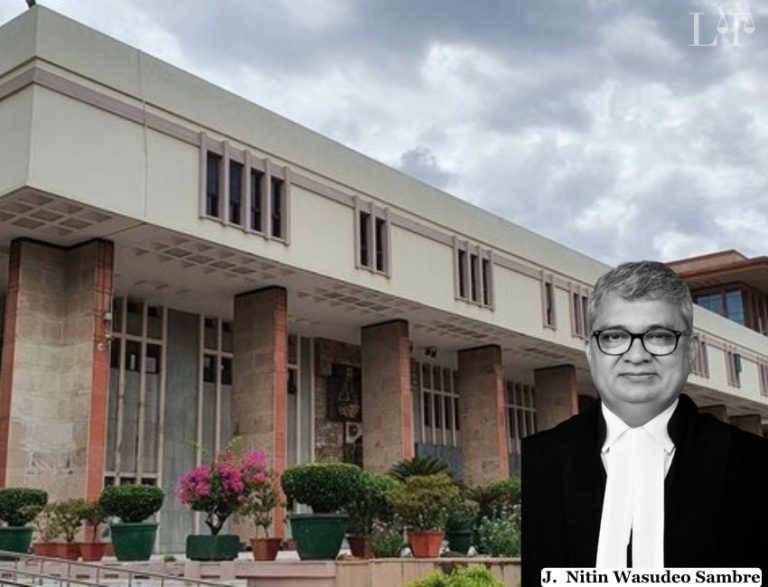
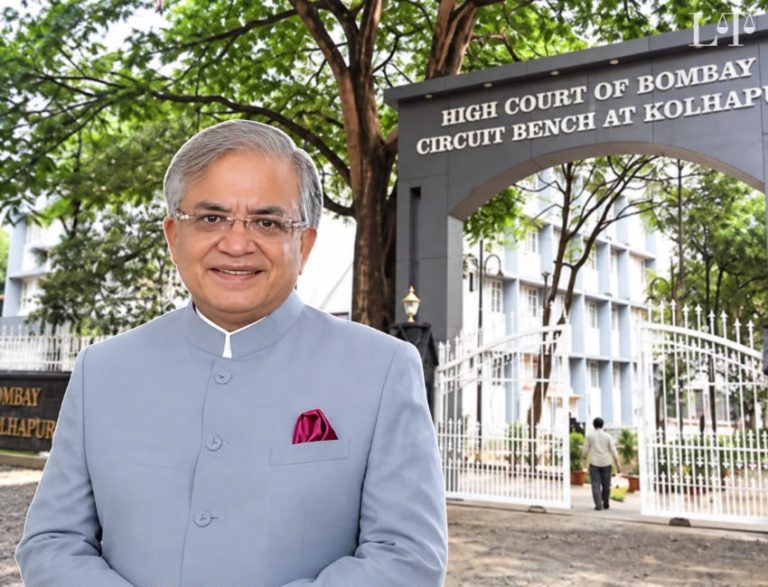
A Division Bench of Justices Valmiki Menezes and Amit Jamsandekar raised concerns about the rejection of Form 8 applications submitted by voters seeking to update their addresses. The Court observed that these voters could be left with no real remedy if their names are removed from the draft electoral roll and they are then stopped from using Form 8 to update their details.
The Case:
The issue came up in a petition filed by Paresh Salgaonkar and members of his family. Their names were left out of the electoral roll during the SIR exercise, even though they had submitted Form 8 applications to change their address.
Court Questions Purpose of SIR:
The Bench asked what the main goal of the SIR exercise really is. It noted that the exercise was meant to find out whether the people on the electoral rolls are Indian citizens, and therefore have the right to stay on the rolls.
The Court said:
“Entire SIR procedure was on the basis that had to find out whether an elector is actually an Indian citizen or not. The basis of the SIR was not to see whether the voter is there or not. It is to find out whether he is an Indian citizen or not.’’
Keeping this in mind, the Court asked a question: if citizens are taken off the electoral roll during the revision, does that not defeat the whole purpose of the SIR?
The Bench asked the ECI:
“Read the judgment, it says ECI has an obligation to ensure that all Indian citizens are on the list… If citizens are excluded what will we do with your SIR? If citizens are being removed from the list then what is the purpose of this entire SIR process then?”
ECI’s Response:
Form 8 is used by an existing voter to ask for a correction of details or a change of address. However, the ECI told the Court that voters who had not submitted the required enumeration form during the SIR had to follow a different process if their names were missing from the draft roll.
Advocate Gauresh Agni, appearing for the ECI, said that the SIR guidelines require voters to submit the enumeration form along with Form 8 to get their address changed. If the enumeration form had not been submitted, the voter would have to use Form 6, which is meant for adding a name to the electoral roll.
The Court, however, asked whether the Supreme Court’s directions on SIR really required Form 6 to be used in place of the enumeration process.
The Bench observed:
“So, will this subserve the purpose by a Form 6 or a Form 8? Judgment [of the Supreme Court on Bihar SIR nowhere says that the manner of doing this is going to be by Form 6. Law is either by the legislature or if it is delegated, or a rule-making power.”
The Court also pointed to the ECI’s constitutional duty to make sure that eligible citizens are not denied their right to be represented on the electoral rolls.
It asked:
“If, by this process, citizens are excluded, then how do we read this mandate?”
Court Flags Impossible Situation For Voters:
The Bench asked how a person who has only moved to a new home could be made to submit Form 6, since that form requires a declaration that the person is not already registered elsewhere.
The Court pointed out that a voter who submits Form 8 is told the application cannot be processed without the enumeration form. But if the voter submits Form 6, they would have to make a declaration that does not correctly describe their situation.
The Bench observed:
“If a voter comes to you with Form 8, saying he has changed his address you just cannot tell that person that look your name isn’t included in the draft roll now you will have to fill in Form 6 (inclusion of new voter). Your enumeration form, basically has a declaration that a person continues to live in the address as mentioned in the existing voters list. But consider, if someone has changed their residence, can you compel the person to make a false declaration by submitting that pre-filled enumeration? Why can’t that person simply give a Form 8 because anyway, his name is there in the existing list he just wants to get his address changed.. Why compel enumeration form?”
Court Rejects Draft Roll Argument:
The ECI’s lawyer argued that under Section 25(2) of the Representation of the People Act, 1950, the SIR involves preparing electoral rolls from scratch. This means the names of people who do not submit enumeration forms would not appear in the draft roll.
He also said that notices were displayed publicly because the ECI may not have updated the addresses of voters who had moved.
The Bench, however, did not accept this reasoning.
“Draft role will not come in picture until the SIR is complete. Here the SIR is not complete. You are in the process.” the court observed.
The bench will continue hearing the matter on October 6.
Case details: Paresh Salgaonkar & 5 Ors v. The State of Goa (WP No. 732 of 2026)