
 By
By 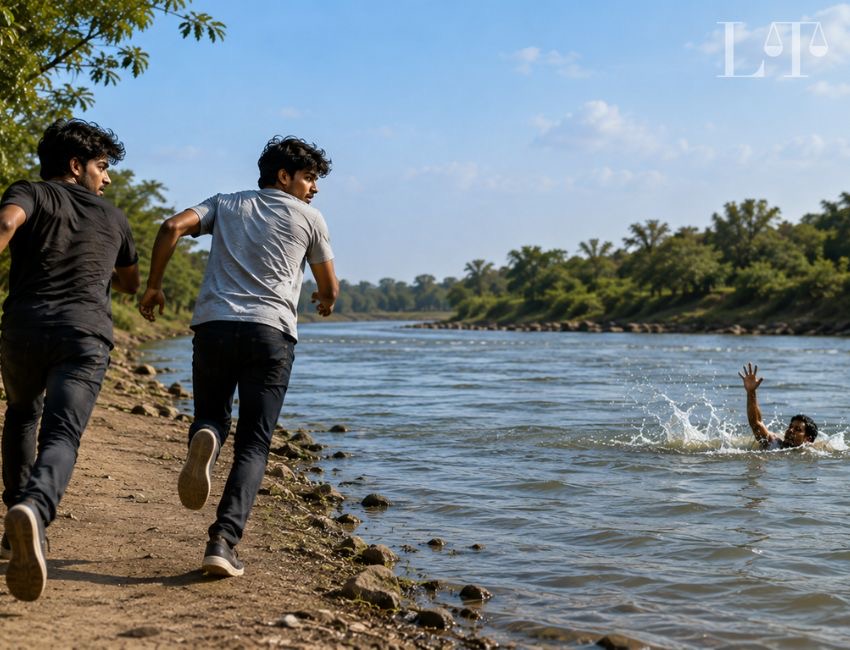
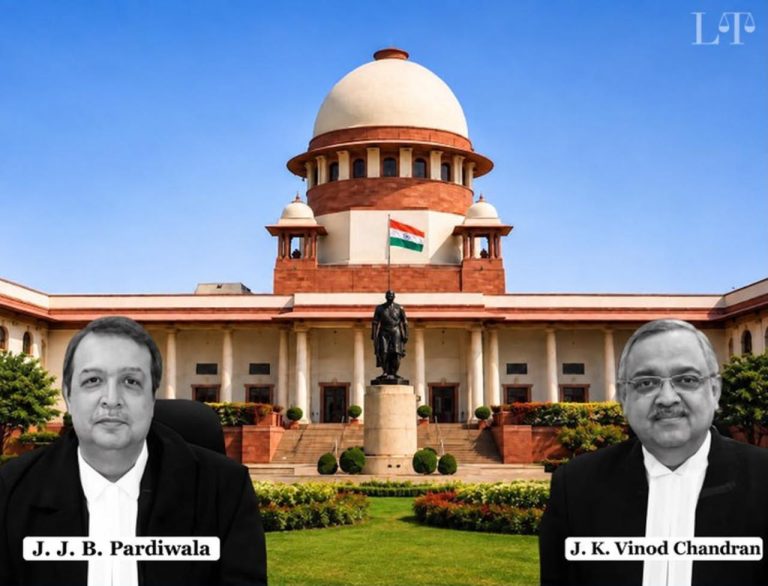
The Supreme Court in its recent judgment acquitted two men who were convicted of murdering their friend in Gujarat. The Bench of Justice J.B. Pardiwala and Justice K. Vinod Chandran held that, although the accused acted wrongly by running away from the spot and going to watch a movie after seeing their friend drown, such conduct, by itself, could not establish that they had murdered him.
Background
On 17 July 2006, early in the morning, the deceased was taken from his house by two accused persons-Taher Vajiyuddin Rangwala and another accused on the pretext of going to Ankleshwar to play volleyball. However, he did not come home in the evening.
The accused later told the deceased’s family that they had gone swimming with him in a river and that he had accidentally drowned. They admitted that they panicked, ran away from the spot, and later went to watch a movie. The body was found the next morning. The post-mortem report stated that the cause of death was “Asphyxia due to drowning.”
The Trial Court convicted both accused under Sections 302, 34 and 201 read with Section 120B of the Indian Penal Code. They were sentenced to life imprisonment for murder. The Gujarat High Court upheld the conviction. The accused then approached the Supreme Court, arguing that the death was accidental and that they were, at most, guilty of fleeing the scene in panic.
Medical Evidence
The Supreme Court first considered whether the death was actually murder. It noted that the post-mortem report recorded drowning as the cause of death.
There were three injuries on the body, but they were not serious. The doctor said that these injuries could have been caused while swimming in the river or when the body struck a hard object while being carried by the water.
The Court therefore held that the medical evidence did not establish that the deceased had been attacked and deliberately drowned. It observed: “The post-mortem report leans in favour of the defense version of an accidental drowning”.
Motive and Bottle Theory
The Court also found the alleged motive doubtful. It observed that the family had allowed the deceased to leave with the accused, which indicated that the deceased and the accused had a friendly relationship. The Court said: “This further puts the motive under a cloud, as a deliberate afterthought.”
The Court also rejected the prosecution’s claim that the accused had attacked the deceased with a soda bottle. Although the prosecution relied on broken bottle fragments and blood stains, no such broken bottle or glass fragments were seized or sent for forensic examination.
Conduct of the Accused
Importantly, the Court held that the accused not immediately informing the family about the drowning could not, by itself, prove murder. Their conduct could also support their explanation that they panicked after an accidental drowning.
The Court said that it cannot be assumed that every person who sees a friend drowning will act rationally. It observed:
“The human mind, as has often been held by this Court, is at the same time fickle, manipulative and imaginative and the actions, the result of a deprived or a foolish mindset, especially in the face of adversities, which cannot be predicted.”
Judgment
The Supreme Court concluded that the evidence did not show a planned murder. It found accidental drowning to be the more probable explanation.
The Court noted that the accused were wrong to flee and not seek help. However, this conduct did not prove that they had murdered their friend. It said:
“The accused are guilty of having fled from the spot and not having attempted to rescue the drowning person, by crying out for help. Their conduct of having gone for a movie after witnessing their friend drowning, though reprehensible, cannot be found to be an incriminating circumstance, to establish murder rather than drowning”.
The Supreme Court set aside the judgments of the Trial Court and the Gujarat High Court and acquitted both accused. It directed that they be released immediately, unless they were required in any other case, and allowed their appeal.
Case Details: Taher Vajiyuddin Rangwala & Anr v. The State of Gujarat