
 By
By 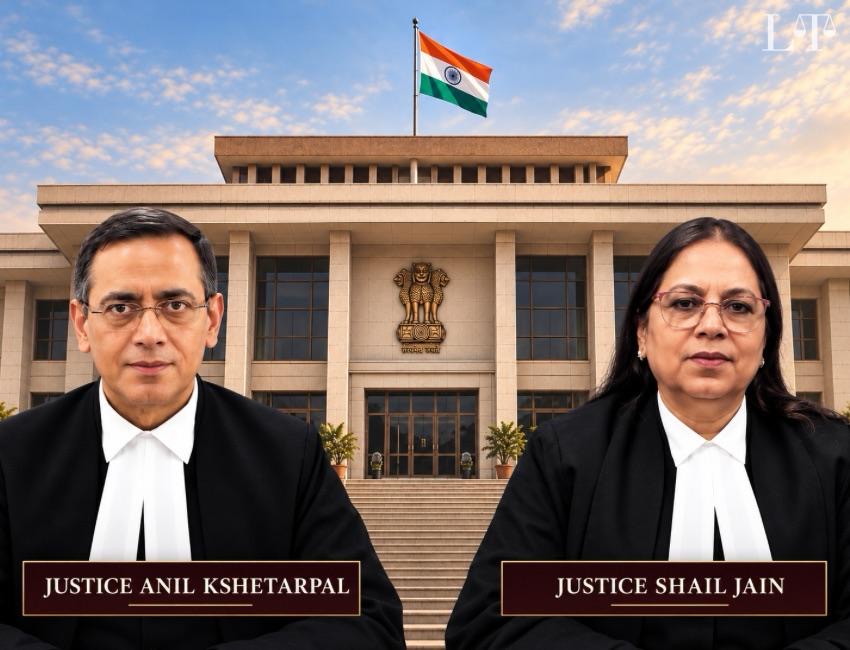
The Delhi High Court has held that the privilege between a lawyer and client cannot be used as a complete shield when a lawyer’s own conduct is being investigated. This applies when the investigators show early proof that the lawyer went beyond the role of a legal adviser.
A two judge Bench of Justice Anil Kshetarpal and Justice Shail Jain dismissed a petition filed by an advocate. He had challenged a search by the Goods and Services Tax (GST) Department at the office of Bass Legal LLP, a firm run by his parents in which he was a partner until 2019. He also challenged the seizure of his Central Processing Unit (CPU) and documents.
Background
The petitioner, Puneet Batra, says he is an advocate who handles tax matters at M/s Bass Legal LLP, a firm run by his parents in Mayur Vihar, New Delhi. He had given professional tax and corporate compliance services to M/s Matkarma Technology Pvt. Ltd. (MTPL). MTPL is under investigation for alleged tax evasion linked to offshore online gambling platforms.
On July 25, 2025, the Anti Evasion Branch of CGST Delhi East searched the Bass Legal premises under Section 67(2) of the Central Goods and Services Tax Act, 2017 (CGST Act). It took documents from the premises and the CPU from the petitioner’s cabin.
The petitioner challenged the search, seizure, panchnama, and summons. He argued that searching an advocate’s cabin and seizing electronic data broke advocate-client privilege and put his other clients’ confidential information at risk. The GST Department replied that he was not just acting as a lawyer. It said he was actively involved in running MTPL’s affairs and allegedly made money from its transactions (0.7% of user deposits, which the petitioner completely denied).
Scope of Advocate Client Privilege:
Justice Anil Kshetarpal wrote the judgment for the Bench. He studied the legal protection given by Section 132 of the Bharatiya Sakshya Adhiniyam, 2023 (BSA). The Court observed that professional privilege protects the client. It is not a personal immunity for the lawyer. The bench said:
“The protection of advocate-client privilege is intended to preserve the confidentiality of communications made in the course of the professional relationship between an Advocate and his client. The privilege, however, attaches to the nature of the communication or material and the circumstances in which it came into existence. It does not follow merely from the fact that the material is found in the office or possession of an Advocate. Consequently, material relating to the independent affairs, transactions or activities of the Advocate himself cannot, merely by reason of its being found in his office, be placed beyond the reach of a lawful investigation.”
Search of Lawyer’s Office Upheld:
The Court held that the search of Bass Legal, including the petitioner’s cabin, was done with valid legal authorization and had enough “reasons to believe” behind it. The Bench found that being an advocate does not make a lawful search invalid on its own. It court said:
“There can be no dispute that communications and material protected by advocate-client privilege are entitled to the protection recognised in law. However, such privilege cannot operate as an absolute bar against an investigation into the conduct of the Advocate himself, where the Respondents have placed prima facie material indicating that the Petitioner may have acted beyond the role of a legal adviser and may have been involved in the affairs under investigation.”
The Court made clear that it was not deciding whether the petitioner is guilty. It was only deciding whether the department had enough basis to go ahead with the inquiry. The Court also noted that the petitioner admitted some files were deleted from a remote location while the search was going on. It treated this as a relevant fact for the authorities to look into.
Objections to Sealed Cover Material:
The Court rejected the petitioner’s objection that he was not given the investigation material the department had submitted in a sealed cover. It held that the Supreme Court’s ruling in Madhyamam Broadcasting Limited was different from this case and did not apply here. Justice Anil Kshetarpal relied on the principles behind Section 192(5) of the Bharatiya Nagarik Suraksha Sanhita, 2023 (BNSS) and on decisions about police case diaries, and observed:
“At the stage of an ongoing investigation, the Court is required to exercise due caution in directing disclosure of the investigative material placed before it, particularly where such disclosure may reveal the statements of persons examined by the investigating agency or the course and direction of the investigation. The fact that such material has been produced before the Court does not, by itself, confer upon the Petitioner an unrestricted right to obtain copies thereof.”
The Bench also rejected the arguments that the search was illegal because there was no Show Cause Notice or because departmental circulars were allegedly not followed.
The Court further noted a later Board Resolution dated September 29, 2025, in which the client, MTPL, clearly agreed to its documents and digital material being given to the tax authorities.
Safeguards for Client Data:
The Bench refused to quash the search. But it stressed that its ruling does not allow authorities to enter lawyers’ premises freely or to see information about other clients. It said:
“Nothing contained in this judgment shall, therefore, be understood as permitting an unrestricted search of an Advocate’s premises or as diluting the protection available to genuinely privileged communications and confidential client material in accordance with law.”
The Bench noted that its finding applied only to the unusual facts of this case, where the lawyer’s own conduct was part of the investigation.
Operative Directions:
The Court dismissed the writ petition and applications. It ended the general interim orders but said the earlier safeguards for examining data would continue to apply. The bench said:
“In order to balance the requirement of investigation with the confidentiality attaching to the affairs of other clients of the Petitioner, it is directed that the Respondents shall, for the purposes of further investigation, make use of the cloned copy of the data prepared pursuant to the orders passed by this Court. The Respondents shall confine the examination of such data to the material relevant to the investigation in question and shall not open, access or examine the data of any other client of the Petitioner which is unrelated to the affairs of MTPL. The Respondents shall accordingly ensure that the confidentiality of the information and documents pertaining to such other clients is not compromised.”
The petitioner’s senior counsel made an oral request seeking a stay of the judgment for one week. The Bench declined the oral prayer.
Case details – Puneet Batra v. Union of India & Ors.