
 By
By 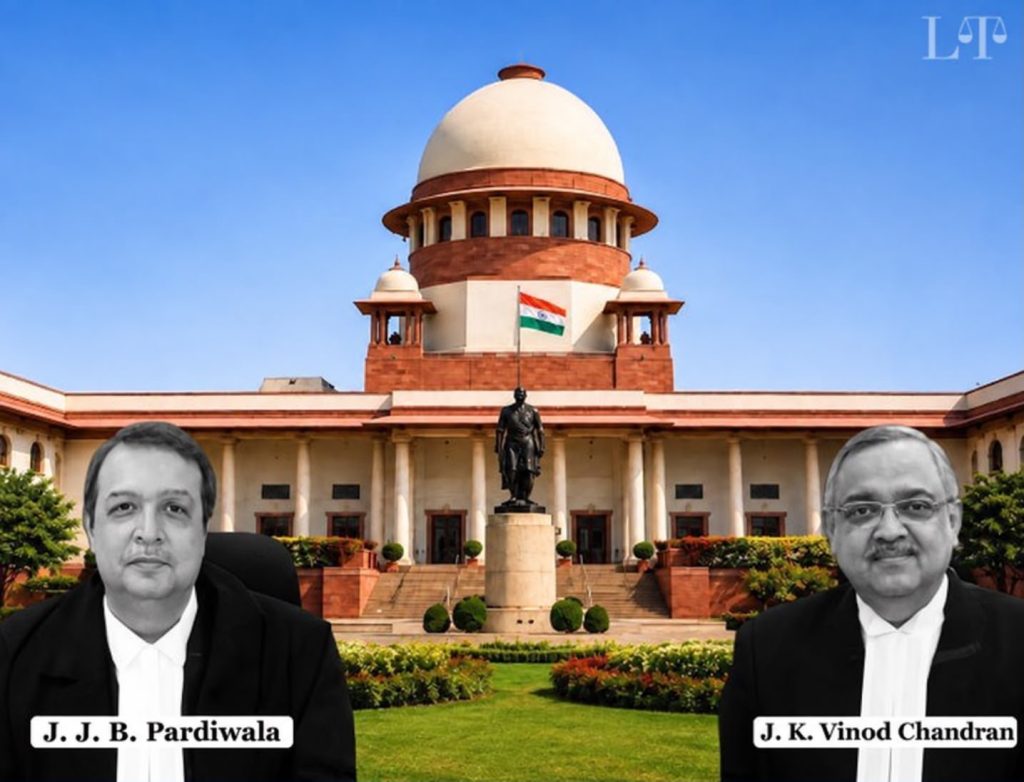
The Supreme Court has quashed criminal proceedings against a trust that had been made an accused in a financial irregularity case in Karnataka. The court said a trust is not a legal person on its own and cannot sue or be sued in its own name.
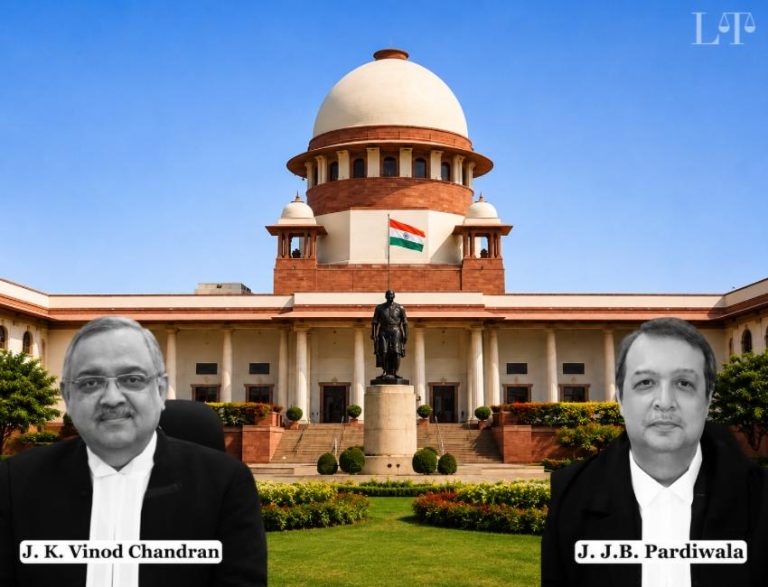
A Bench of Justice J.B. Pardiwala and Justice K. Vinod Chandran reiterated that the legal duties relating to a trust belong to its trustees, not to the trust as a separate legal entity.
BACKGROUND
A Trust was directly named as an accused in a financial irregularity case under the Indian Penal Code and the Karnataka Protection of Interest of Depositors in Financial Establishments Act, 2004. After the High Court refused to quash the charges, the trust appealed to the Supreme Court.
The State argued that the Trust must be named as an accused, but the Bench of Justices J.B. Pardiwala and K. Vinod Chandran rejected this argument. Relying again on earlier rulings such as Pratibha Pratisthan (2017), the Apex Court held that a Trust is not a juristic (legal) person and has no separate legal existence that allows it to sue or be sued.
As a result, the Supreme Court quashed the criminal case against the Trust itself, while allowing the case against the individual trustees to continue.
What was the issue?
The State argued that the trust should not be let off just because it had not been correctly arrayed as an accused. The State also argued that earlier rulings about trusts could not apply here, since the case involved offences under the Indian Penal Code and the Karnataka Protection of Interest of Depositors in Financial Establishments Act, 2004.
What did the Supreme Court say?
Beyond the question of who can be named an accused, the State also raised this separate point about which past rulings should apply.
The Supreme Court relied on the principle laid down in Pratibha Pratisthan v. Manager, Canara Bank (2017) which has been followed since. The Court said:
“…a Trust does not have a separate legal existence of its own, making it incapable of suing or being sued, since it is only an obligation annexed to the ownership of the property arising out of a confidence reposed in and accepted by the owner or declared and accepted by him, for the benefit of the another, or of another and the owner. The obligation to maintain or defend suits is placed on the shoulders of a Trustee and not on the Trust itself.”
Case Title: Madasa Masih-UI-Uloom Educational and Charitable Trust Versus State of Karnataka & Ors.