
 By
By 
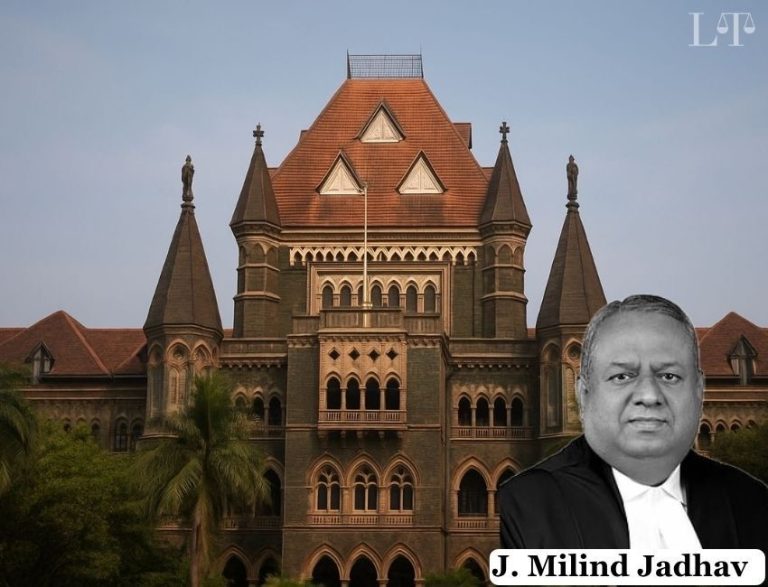
The Bombay High Court’s Bench of Justice Sandeep V. Marne recently dismissed a second appeal filed by a man challenging his sister’s one-third share in their ancestral property. The Court ruled that while it is legally okay to give up your share in property just by saying so (without any paperwork), the brother in this case couldn’t prove that his sister had actually done that.
The Family Dispute
The case involved a brother, Shekhar Shankar Joshi, and his sister, Anita Arun Bhave, fighting over ancestral land and a house.
After the death of their father, the names of the siblings and their mother were entered in the revenue records. Anita’s name was later removed from the records based on an affidavit signed by her. The brother subsequently claimed that Anita had orally relinquished her share in the ancestral property in his favour. He argued that the affidavit supported this alleged oral relinquishment. Anita, however, denied giving up her share and filed a suit seeking partition and separate possession of the property.
The Trial Court first said both siblings should get equal, one-half shares. But the appellate court later decided that their mother had properly transferred her share to the brother through a legal document (a Relinquishment Deed) signed in 2013. This meant Anita ended up with one-third of the property, and the brother got two-thirds.
Can a Coparcener Orally Give Up Their Share?
The main legal question was: does giving up a share in ancestral property always need to be done in writing and officially registered?
The High Court’s answer was no. It looked at past court decisions and confirmed that a person can give up their share in joint family property simply by clearly saying out loud that they want to do so. You don’t always need to put it in writing or get it officially registered.
It held: “ it is not always necessary to execute a written document or to register the same for evidencing the relinquishment of interest in the joint family properties in favour of other coparceners. Such relinquishment or abandonment can be done even orally by expressing an intention of doing so.”
But the Court also made clear that this rule only applies to joint family or ancestral property. It does not necessarily apply when property is inherited from someone who died without leaving a will, if that property was something the deceased person had personally earned or bought (rather than ancestral property passed down through the family).
Signing to Remove a Name Doesn’t Prove Giving Up a Share
The main question in this part of the case was: could Anita’s affidavit, where she agreed to have her name removed from the land records, prove that she had verbally given up her share? The Court found that the affidavit said nothing about giving up any share at all. It only dealt with removing her name from the records.
The Court also pointed out that the affidavit was signed only to get her name deleted from the records. It never said that this deletion was happening because she had given up her share in the property.
“affidavit by itself does not effect relinquishment of share by the Plaintiff. The Affidavit also does not state that in the past the Plaintiff had relinquished her share in the ancestral property. The affidavit is silent about alleged relinquishment. The affidavit merely records consent of the Plaintiff for deletion of her name from ancestral property bearing Gat Nos.27 and 28.” the court observed.
So the Court rejected the idea that just because someone’s name is removed from the land records, it automatically means they gave up their share in the property.
It held: “The second question can therefore be answered by holding that oral relinquishment cannot be presumed merely on the basis of a document signed for deletion of name of coparcener from revenue records, when the document is silent about any relinquishment.”
Brother Couldn’t Prove His Claim
The Court agreed that giving up a share verbally is legally valid. But it found that the brother could not prove that his sister had actually done this.
“the Defendant took the defence of oral relinquishment and therefore the burden was on the Defendant to prove effecting of such oral relinquishment by the Plaintiff. Beyond his bear words, he did not lead any evidence to prove any such relinquishment,” the court said.
The Court pointed out that the brother could not say exactly when, where, or how Anita had supposedly given up her share. He also did not bring any witness to court who could confirm that this had happened.
The Court also noted that his claims about the relinquishment were too vague. There was nothing to support his story except his own word.
Agreeing to Another’s Share Isn’t Giving Up Your Own
The brother had also argued that because Anita had agreed to let their cousin get a share of a different ancestral property, this should mean she had also given up her rights in the property they were now disputing.
The High Court rejected this argument too. It held that agreeing to someone else’s right to a share is completely different from voluntarily giving up your own share.
“Admitting share of cousin in joint family property is a concept distinct from the concept of abandoning her own share by the Plaintiff in such properties. Admitting share of another coparcener cannot be confused with the concept of relinquishment of share in the joint family property,” the Court observed.
Therefore, Anita’s consent to the allotment of one property to her cousin could not automatically establish that she had abandoned her own share in the remaining ancestral property.
Appeal Dismissed – Claim Not Proved
The High Court held that although giving up a share in ancestral property is legally allowed, it must be backed by evidence. Since the brother (Defendant-Appellant) had failed to prove that his sister (the Plaintiff) had orally given up her share, the Court upheld her one-third share in the property.
Finding no reason to interfere with the Appellate Court’s order, the Court dismissed the Second Appeal and directed the parties to bear their own costs. The Interim Application was also disposed of.
Case Details: Shekhar Shankar Joshi v. Anita Arun Bhave