
 By
By 
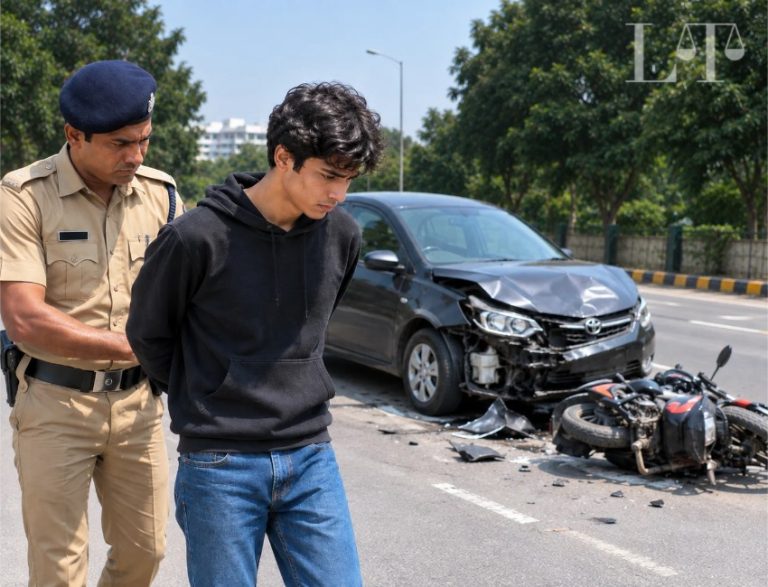
The Bombay High Court has dismissed an appeal filed by Tahir Khan, son of Tasbbar Khan Pathan and upheld his conviction under Section 302 of the Indian Penal Code for the murder of Hasruddin Sarafuddin Shaikh.
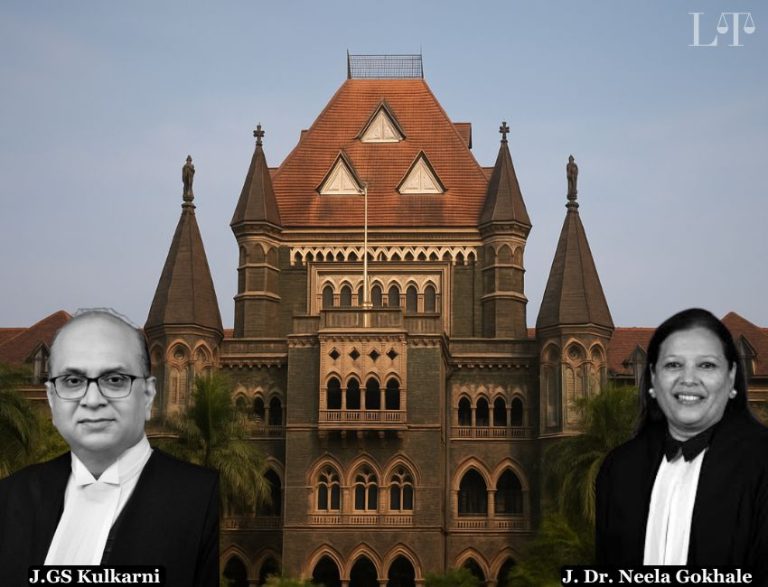
The Division Bench of Justice Manish Pitale and Justice Shreeram V. Shirsat pronounced the judgment on September 22, 2026.
What happened:
According to the prosecution, the appellant and the deceased were acquaintances and room partners. On May 21, 2013, they went to Daman and drank liquor near Girish Bar, Kachigam. Around 2 a.m., the deceased refused to carry a bag containing wine and beer. The appellant allegedly attacked him with a knife and ran away. The injured man was found the next morning. He was first treated at Government Hospital, Daman, and later moved to J.J. Hospital, Mumbai, where he died on June 4, 2013.
The Sessions Court, Daman had earlier convicted the appellant and sentenced him to life imprisonment.
No eyewitness, but three dying declarations:
The High Court noted that no one saw the actual attack. The prosecution’s case mainly relied on three dying declarations made by the deceased before he died, an oral statement to a waiter, an oral statement to a police head constable, and a written statement recorded by the investigating officer.
The Bench found all three statements matched each other on who the attacker was and how the attack happened. The Court said:
“Upon a perusal of the oral dying declarations made by the deceased orally to P.W. 1 and P.W. 2 and the written dying declaration made to P.W. 11, we find that they are consistent and cogent.”
It further said:
“The deceased was able to describe the incident in explicit detail and continued to mention ‘Tahir’ as being the individual who caused him the stab injuries.”
The Bench then compared the statements with the legal rules for dying declarations. After doing this check, it reached its conclusion.
“Hence, on a conjoint reading of all the dying declarations on record, and testing them against the guidelines enumerated in Irfan Naka (supra), we accordingly hold the dying declarations to be truthful, voluntary and worthy of credence.”
Appellant’s objections rejected:
The appellant argued that the dying declaration should not be trusted because:
- a) the deceased was semi-conscious at first,
- b) there was no separate medical certificate confirming he was fit to give a statement, and
- c) the statement wasn’t recorded by a Magistrate.
The High Court rejected all these points, relying on Supreme Court rulings, including Laxman v. State of Maharashtra. It said that just because there was no doctor’s certificate, or because a Magistrate didn’t record the statement, doesn’t automatically make the statement invalid. The investigating officer had testified that the deceased was conscious and talking when the statement was taken.
Delay in death and cause of death:
The deceased died almost two weeks after the attack, and the cause of death was septicemia and perforative peritonitis (infection and a hole/tear in the abdominal lining). The appellant argued that because so much time passed, the attack could not be blamed for causing the death.
The Bench disagreed, pointing to medical evidence showing the septicemia developed as a complication of the stab wounds. The Court said:
“In these circumstances, we hold that the interval before the deceased succumbed to his injuries does not, by itself, detract from the homicidal nature of his death.”
Identity of the attacker:
The deceased had named his attacker as ‘Tahir’, “Tahir Kunnu Pathan,” and “Tahir Pathan,” while the appellant’s own name was ‘Tahir Khan’. The Bench held that this small difference in how the name was recorded did not create real doubt about who the attacker was, especially since other evidence also linked the appellant to the deceased.
Phone records:
The prosecution also used call records and IMEI numbers(mobile networks use it to track, locate and block stolen devices) to link the appellant to the mobile numbers involved in the case. There was a mismatch in the last digit of two IMEI numbers, but the first fourteen digits matched. The Court accepted this evidence, relying on the Supreme Court’s reasoning in Sundar alias Sundarrajan v. State by Inspector of Police.
Conclusion:
The High Court held that the evidence connecting the appellant to the phone and to the dying declarations was clearly established. It also rejected the argument that the case should be treated only as one based on circumstantial evidence.
“We further find that the statements are cogent, consistent and have been made voluntarily and therefore satisfy the requirements of a dying declaration.”
The Court agreed that the Sessions Court was right to rely on the three dying declarations.
It therefore held that the conviction should stand and dismissed the appeal:
“We are therefore of the opinion that the Appellant has been rightly convicted by the Sessions Court, Daman and accordingly we uphold the conviction of the Appellant,” concluded the court.
Case Details: Tahir Khan S/o Tasbbar Khan Pathan v. State of Maharashtra & Anr. (Criminal Appeal No. 234 of 2018)