
 By
By 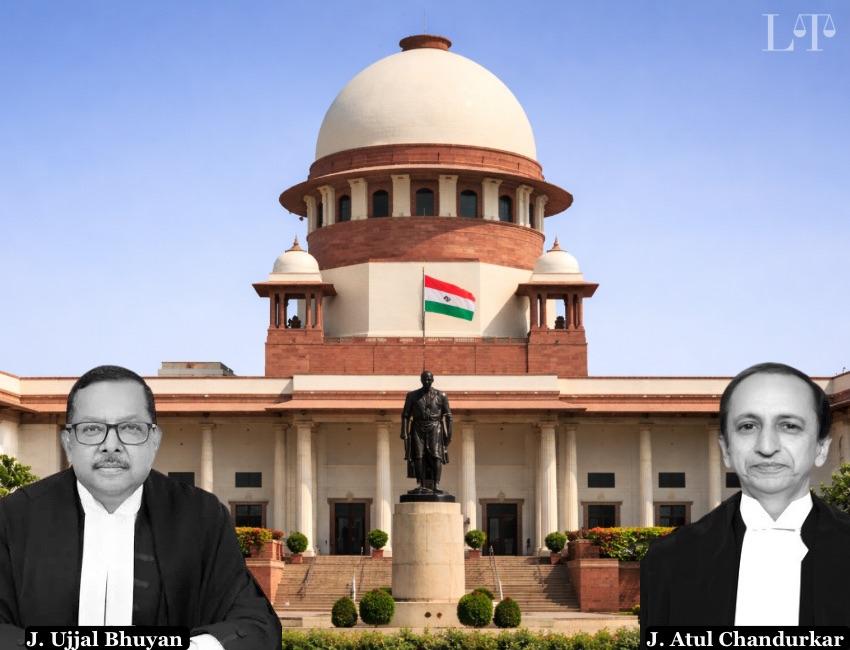
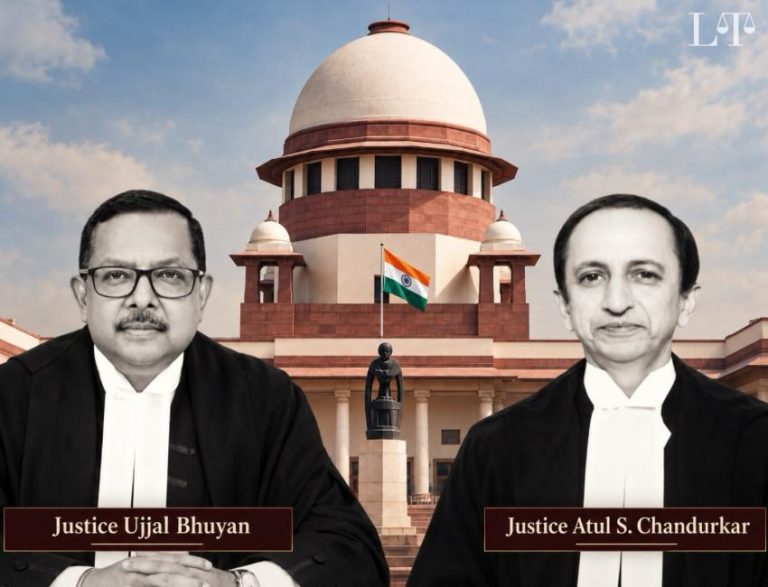
The Supreme Court in a ruling by Justice Ujjal Bhuyan and Justice Atul S Chandurkar, set out strict rules for when police can re-arrest a person whose first arrest was declared illegal for breaking Article 22(1) of the Constitution.
The Court said police cannot re-arrest such a person on their own. They must first go to the Magistrate and give the grounds of arrest in writing.
Justice Bhuyan said: “Once there is a breach of Article 22(1), the power of re-arrest should not be left to the discretion of the very same authority who violated the provision of the constitution. It must be judicially implemented.”
What the police must do:
If an investigating agency wants to take the accused back into custody after they were released for an Article 22(1) violation, the agency must file an application before the Magistrate explaining why re-arrest is needed. This application can only be filed after the grounds of arrest have been given to the accused. It must also explain why the grounds were not given at the time of the first arrest.
The application must also be signed off by the senior officer above the police officer who made the first arrest. The Magistrate must look at the application quickly, and can only allow re-arrest if satisfied that:
a). there was a genuine reason the grounds weren’t given the first time, and
b). further custody is actually needed.
Justice Bhuyan explained: “It is only when the magistrate is satisfied that for bona fide reasons, the grounds of arrest could not be furnished to the arrestee at the first instance, but furnished subsequent to his relief and on further satisfaction that the accused needs to be re-arrested, he may pass an order permitting the investigating agency to re-arrest. On the administrative side, the superior authority when presented with the application seeking his endorsement for custody of the accused who has been released for violation of Article 22(1), shall hand over the investigation of the case to another officer, further directing departmental inquiry for such a serious lapse. If the inquiry culminates in an adverse finding against the erring police officers, it would entail departmental action with entry in the service book of such officer.”
Other directions from the Court
The bench also ordered that:
- the case must be handed to a different police officer once such a violation happens, and
- a departmental inquiry must be started against the officer who made the illegal arrest.
If that inquiry finds the officer at fault, it can lead to departmental punishment and a mark on the officer’s service record.
Key legal points made by the Court:
1). The right to get written grounds of arrest is a basic constitutional protection. This applies no matter whether the arrest is under ordinary criminal law or a special law.
2). The accused does not need to separately prove that this violation caused them harm.
3). The Court said: “The safeguards enumerated in Article 22(1) are not mere procedural safeguards; these are fundamental principles which are required to be followed in the event the liberty of a person is sought to be curtailed. Therefore, it is not correct to say that procedural lapses in furnishing grounds of arrest don’t ipso facto render the custody illegal or entitle the accused to bail. When the accused is released for violation of his fundamental rights under Article 22(1), he is not released on bail; he is released from illegal and unconstitutional detention.”
4).Filing a chargesheet later, or a court taking cognisance later, cannot fix an arrest that was unconstitutional from the start.
The case:
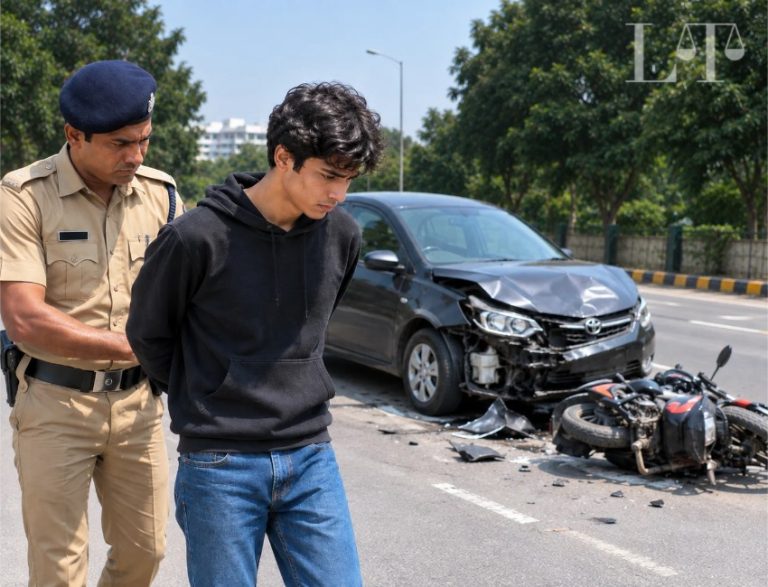
This ruling came in the case of Jaskaran Jeet Singh, who was accused in a case involving sexual assault of a minor. His arrest was declared illegal because he was not given the grounds of arrest as required under Article 22(1).
The Court also referred to its earlier ruling in Mihir Rajesh Shah v State of Maharashtra (2025), and said that the principles in that case are the correct legal position on giving written grounds of arrest.
The Court stressed that constitutional protections for personal liberty must stay strong no matter how serious the crime is.
The Court also said: “This appeal raises an important question of wide constitutional import. Can an accused who has suffered a breach of both clauses (1) and (2) of Article 22 of the Constitution of India be re-arrested and if so, under what circumstances, in what manner and what is the procedure which is required to be followed? Though Sri Darshan and Sonam Raghuvanshi may appear to strike a discordant note, we need not labour on this. Judgment in Sri Darshan was rendered before judgment in Mihir Rajesh Shah v State of Maharashtra (2025). Likewise, in the case of Sonam Raghuvanshi, the arrest took place prior to Mihir Rajesh Shah. Therefore, it is Mihir Rajesh Shah that sums up the correct position and lays down the correct law, which is binding. It is in tune with the consistent line of jurisprudence laid down by this Court.”
The Supreme Court ordered that a copy of this judgment be sent to the Directors General of Police of all States and Union Territories.
Case Details: JASKARAN JEET SINGH v STATE OF PUNJAB | Crl.A. No. 4234/2026