
 By
By 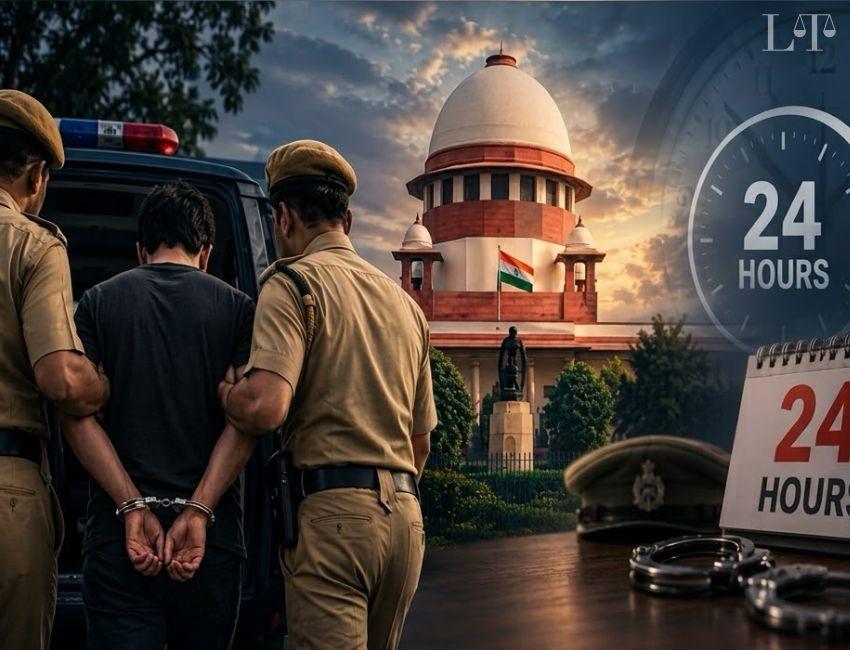
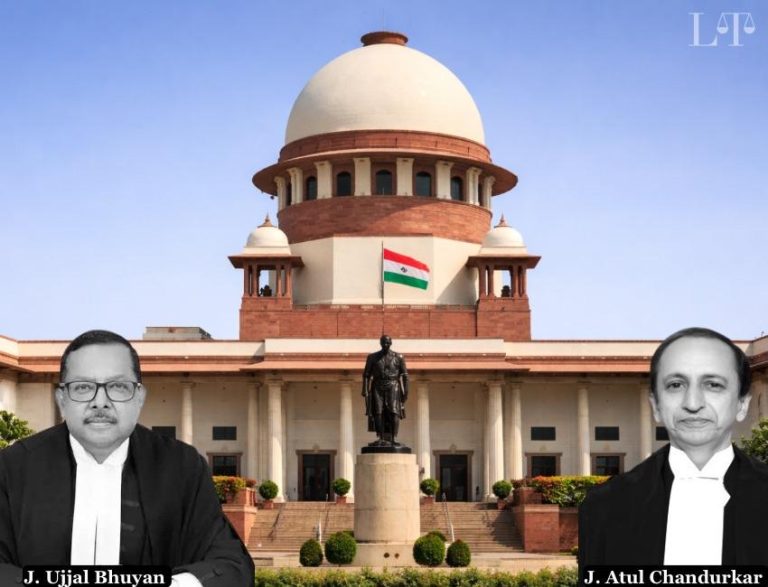
The Supreme Court, in a significant judgment authored by Justice Ujjal Bhuyan, has laid down important rules about when police can re-arrest a person whose earlier arrest was found to be unconstitutional.
This happened because the arrest broke the rules in Article 22 of the Constitution, which protects people who are arrested. The case was Jaskaran Jeet Singh Deol v. State of Punjab.
The Court looked at whether someone whose rights were violated under both Article 22(1) (the right to be told the reasons for arrest) and Article 22(2) (the right to be produced before a Magistrate within 24 hours) could be arrested again in the same case. The Court cancelled the order of the Punjab and Haryana High Court and ruled that when these constitutional protections are broken, the police cannot simply re-arrest the person as if nothing had happened.
How the Case Started:
An FIR was filed in Punjab accusing someone of physically and sexually abusing a minor girl. The complaint used sections of the Bharatiya Nyaya Sanhita, 2023, and the Protection of Children from Sexual Offences Act. Jaskaran Jeet Singh Deol was arrested on the morning of May 17, 2026, and brought before the Judicial Magistrate on May 18, 2026, so police could ask for his custody.
But the Magistrate noticed the police had not given the accused a written copy of the reasons for his arrest. Relying on an earlier Supreme Court ruling, Mihir Rajesh Shah v. State of Maharashtra, the Magistrate said this broke both the law and the Constitution, and ordered the accused released immediately, since the arrest was illegal.
The Magistrate said the police could still act again if they followed the law properly. So that same day, the police filed a new request for his custody, citing the seriousness of the case, the need to question him in custody, and the need to recover electronic evidence.
But the Additional Chief Judicial Magistrate rejected this request too, saying the written reasons for arrest still hadn’t been given, and custody couldn’t be granted without the accused being present.
What Happened in the High Court:
The case then went to the Punjab and Haryana High Court. The accused argued that, besides not being told the reasons for his arrest, he was also produced before the Magistrate after the 24-hour limit set by the Constitution.
But the High Court refused to stop the police from re-arresting him. It said that even though the first arrest was illegal, the accused wasn’t immune from being arrested again, the police could get a warrant, re-arrest him, or seek his custody through proper legal means.
The Supreme Court then had to decide exactly what happens legally after such violations of Article 22(1) and Article 22(2), specifically, whether the person could be re-arrested right away.
What Article 22 Says:
Article 22 gives basic protections to arrested people. Article 22(1) says a person must be told, as soon as possible, why they were arrested, and has the right to a lawyer of their choice. Article 22(2) says every arrested person must be brought before the nearest Magistrate within 24 hours (not counting travel time), and cannot be held longer without the Magistrate’s permission. The Court stressed that these rules apply right at the point where the State takes away someone’s freedom.
The Right to know the Reasons for Arrest:
The Court referred to several earlier rulings, Pankaj Bansal, Prabir Purkayastha, Vihaan Kumar, and Mihir Rajesh Shah. It repeated that telling an arrested person why they were arrested is not just a formality, it is a constitutional protection that lets the person understand why their freedom was taken, talk to a lawyer, challenge police custody, and ask for bail.
The Court said this information must be given in a real, meaningful way, not just as a routine step.
It especially relied on the rule from Mihir Rajesh Shah: normally, the written reasons for arrest must be given to the person. In rare cases where this isn’t possible right away, the reasons can be given orally at first, but the written version must follow soon after, and in any case, at least two hours before the person is brought to the Magistrate for a custody hearing.
The Court confirmed what happens if this rule is broken.
The Court used strong words about this protection. It said: “Any attempt to encroach upon the fundamental rights guaranteed under Article 22(1) of the Constitution has to be frowned upon by the courts and dealt with strictly.” It added that breaking this rule “would vitiate the process of arrest and remand,” and that the right under Article 22(1) “is not a mere formality or a matter of procedure” but “a mandatory binding constitutional safeguard.”
The Court also made clear that once an arrest becomes illegal because Article 22(1) was violated, nothing that happens later can fix it.
Filing a chargesheet or a court taking up the case afterward does not make an illegal arrest legal. The Court also said this violation could not be called a mere “procedural lapse.” It explained that when the Constitution itself is broken, the person does not need to prove they were harmed by it. This is different from smaller procedural mistakes, where such proof may be needed.
What Happens After Release:
The judgment then explained what happens once such a person is released. The Court said this kind of release, due to a violation of Article 22(1), is different from ordinary bail.
Here, the person is released because their detention itself was illegal and unconstitutional. So, the police cannot treat this as a small setback and simply arrest the person again on their own.
Following the same approach as the earlier Mihir Rajesh Shah ruling, the Court said: “If upon release of such an accused, the investigating agency is still of the opinion that for furthering the course of investigation it is necessary to have custodial interrogation of the accused, then as directed in paragraph 65 of Mihir Rajesh Shah, the investigating agency has to file an application before the concerned Magistrate for custody mentioning therein the reasons for re-arrest of the accused and the necessity for the same. The application should also contain the explanation for non-supply of the grounds of arrest to the accused at the first instance. However, this application can only be moved after furnishing the grounds of arrest to the accused. To rule out any foul play or collusion, such an application must have the endorsement of the immediate superior authority.”
The Court explained why: “once there is a breach of Article 22(1) of the Constitution, the power to re-arrest the accused must not be left to the discretion of the very same authority who had violated the said provision of the Constitution. It must have the judicial imprimatur.”
In other words, the police do not have unlimited power to re-arrest someone right after violating that person’s constitutional rights during the first arrest.
“What is sought to be highlighted is that once there is a breach of Article 22(1) of the Constitution, the power to re-arrest the accused must not be left to the discretion of the very same authority who had violated the said provision of the Constitution. It must have the judicial imprimatur. It is only when the Magistrate is satisfied that for bona fide reasons the grounds of arrest could not be furnished to the arrestee at the first instance but furnished subsequent to his release and on further satisfaction that the accused needs to be re-arrested, he may pass an order permitting the investigating agency to re-arrest.”
The Court also said:
“On the administrative side, the superior authority when presented with the application seeking his endorsement for custody of the accused who has been released for violation of Article 22(1) shall hand over the investigation of the case to another officer, further directing departmental enquiry for such a serious lapse. If the enquiry culminates in adverse finding against the erring police officer(s), it would entail departmental action with entry in the service book of such officer(s).”
On the 24-Hour Rule (Article 22(2)):
The Court then looked at the second issue: Article 22(2). It noted the accused was arrested around 7:54 a.m. on May 17 but wasn’t brought before the Magistrate until around noon on May 18, which was beyond the 24-hour limit.
The Court examined earlier cases, Bhim Singh, Manoj, and Subhash Sharma, to work out what happens when this kind of violation occurs.
It pointed to Bhim Singh as a key example. In that case, the person wasn’t properly produced before Magistrates even though remand orders were obtained. Even though he was no longer in custody by the time the Supreme Court heard the matter, the Court still ruled that the constitutional violation did not disappear just because he was later released. The court awarded him compensation as a public law remedy.
Based on this reasoning, the Court rejected the idea that violating Article 22(2) only gives the accused the right to be released, while leaving police completely free to re-arrest him right away.
It ruled that if police still want custody after releasing someone because of an Article 22(2) violation, they must follow the same safeguards that are required for judicial review of that custody request.
Why This Case Is Different From ‘Default Bail’ Cases:
The Court also explained why this case is different from cases about default bail. The State had pointed to two earlier cases, Sanjay Dutt and Rakesh Kumar Paul, to argue that being released in some situations does not stop the police from arresting the person again later.
But the Court said those cases were about a different right: the statutory right to default bail, which applies when police fail to file a chargesheet on time. This case was different because the accused’s basic constitutional rights were violated right at the time of arrest.
The Court said: “There is a fundamental difference to the proposition of law laid down in those two cases and the present one.” It explained the earlier cases were about default bail, while this case involved “not only the violation of statutory rights of the appellant but also his fundamental rights under clauses (1) and (2) of Article 22; both infringements being at the threshold of arrest.”
So the Court ruled that the same process required for an Article 22(1) violation must also apply when Article 22(2) is violated and police still want custody after release.
Depending on the case, the Court said compensation could also be awarded as a public law remedy for an Article 22(2) violation. The person is still free to pursue a separate civil case if they wish.
Rights Stay the Same, No Matter the Crime:
The Court also made a broader point : constitutional protections cannot be made weaker just because the accusations in a case are serious.
It said: “The Constitution or a constitutional provision cannot be interpreted in a vacuum.” It added that “violation of the Constitution or a constitutional provision cannot be countenanced” and must “be dealt with strictly.” The Court made clear that this protection applies to every case, no matter how serious the crime is or what type of crime is alleged.
The Court also confirmed that even in serious cases, a person’s freedom can only be taken away by following the exact steps set out in the Constitution and the law.
Serious accusations do not remove the legal requirements for arrest and detention. The constitutional process must be followed no matter what type of crime is alleged.
The Court’s Final Decision:
Based on all this, the Supreme Court cancelled the Punjab and Haryana High Court’s order dated May 29, 2026, along with the related parts of the Magistrate’s order dated May 18, 2026.
It ruled that if the authorities still want to question Jaskaran Jeet Singh Deol in custody, they must follow both the safeguards from Mihir Rajesh Shah and the new safeguards created in this judgment for Article 22(1) and Article 22(2) violations.
At the same time, the Court made clear it was not giving any opinion on whether the accusations against him were true or false.
The Court allowed the appeal and ordered that copies of the judgment be sent to the Director Generals of Police of all states and union territories, the Registrar Generals of the High Courts, and the Directors of State Judicial Academies.
Case Details: JASKARAN JEET SINGH v STATE OF PUNJAB | Crl.A. No. 4234/2026