
 By
By 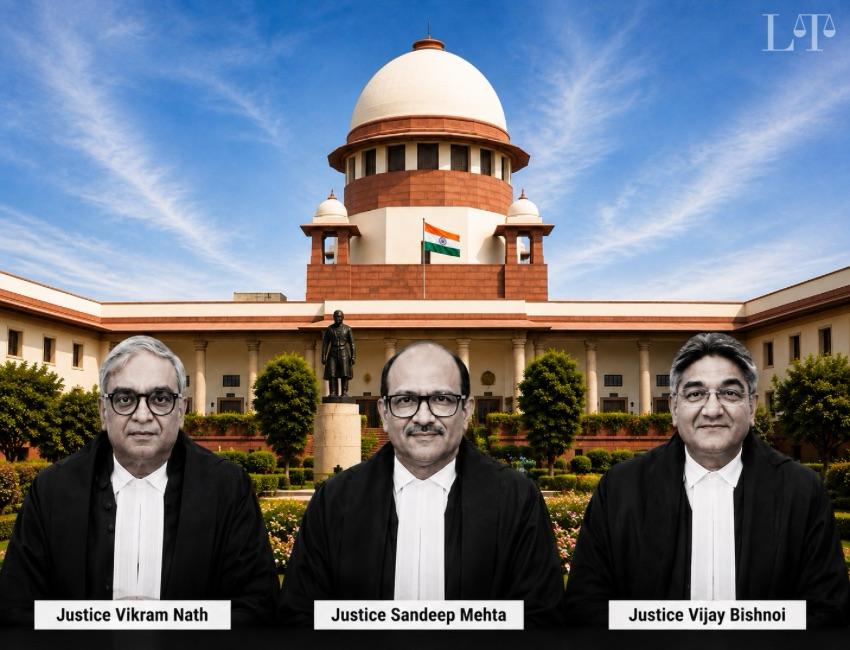
The Supreme Court has upheld the disciplinary action against Advocate Rizwan Siddiquee for disclosing confidential information about his former client, Rehana Khan, during television interviews.
The Court held that an advocate’s duty to keep a client’s information confidential continues even after the professional relationship between them ends.
A Bench comprising Justice Vikram Nath, Justice Sandeep Mehta and Justice Vijay Bishnoi dismissed the proceedings challenging the disciplinary action against Siddiquee.
Case Background
The case arose from the professional relationship between Rehana Khan and advocate Rizwan Siddiquee. Siddiquee had represented Khan during 2013–2014.
After a dispute arose between them, Khan filed a complaint against Siddiquee before the Bar Council of India (BCI). She accused him of professional misconduct, including disclosing confidential information.
The BCI Disciplinary Committee found Siddiquee guilty of professional misconduct. It ordered that his name be removed from the roll of advocates for two years. It also directed him to pay ₹3 lakh to Khan and ₹2 lakh to the BCI Welfare Fund.
Both Khan and Siddiquee challenged the disciplinary order before the Supreme Court. Khan sought a stricter punishment and ₹2 crore in compensation, while Siddiquee challenged the finding that he had committed professional misconduct.
Duty Continues After Dispute
The Supreme Court considered Siddiquee’s disclosure of information about his former client during a television interview.
The Court held that an advocate’s professional duty does not end simply because the client later becomes an adversary.
The Court observed:
“An advocate’s duty is not conditional upon the client’s continued good behaviour towards the advocate.”
It further held:
“An advocate cannot use information received in confidence against his client, and the fact that she has since become his adversary makes no difference.”
No Confidential Details On TV
The Court said that if an advocate believes that false allegations have been made against him, he can respond before the investigating agency or take other legal steps.
However, this did not allow Siddiquee to disclose confidential communications with his former client on television.
The Court observed:
“What he may not do is take his grievance to a television channel and there disclose privileged communications, play recorded conversations with his former client, and describe her complaint as a false case of rape while accusing her of seeking publicity.”
The Court therefore found no reason to interfere with the finding of professional misconduct arising from the television interview.
Two-Year Action Upheld
The BCI Disciplinary Committee had ordered Siddiquee’s name to be removed from the roll of advocates for two years. The Supreme Court upheld this disciplinary action.
Khan had asked the Court to permanently remove Siddiquee from the roll of advocates and award her ₹2 crore as compensation.
The Court refused to increase the punishment.
It noted that Khan herself had not been fully candid about certain aspects of the dispute.
The Court observed:
“having been less than candid about each of these matters, she cannot ask us to enlarge a relief granted to her.”
Court Disapproves Both Parties
The Court also strongly disapproved of the conduct of both Khan and Siddiquee.
It noted that their dispute had continued before the Bar Council of India, the High Court and the Supreme Court for eleven years.
The Court said:
“We record our strong disapproval of the conduct of both.”
It further said:
“each of these parties has come to us complaining of a wrong, and each has been the author of a good part of it.”
₹5 Lakh Costs Each
The Supreme Court dismissed the proceedings challenging the disciplinary order and upheld the BCI’s decision. In view of the conduct of both parties, the Court directed Rehana Khan and Rizwan Siddiquee to each pay ₹5 lakh as costs to the Supreme Court Legal Services Committee within four weeks.
Case Details: Rehana Khan v. Rizwan Siddhiquee, Civil Appeal No. 12256 of 2025