
 By
By 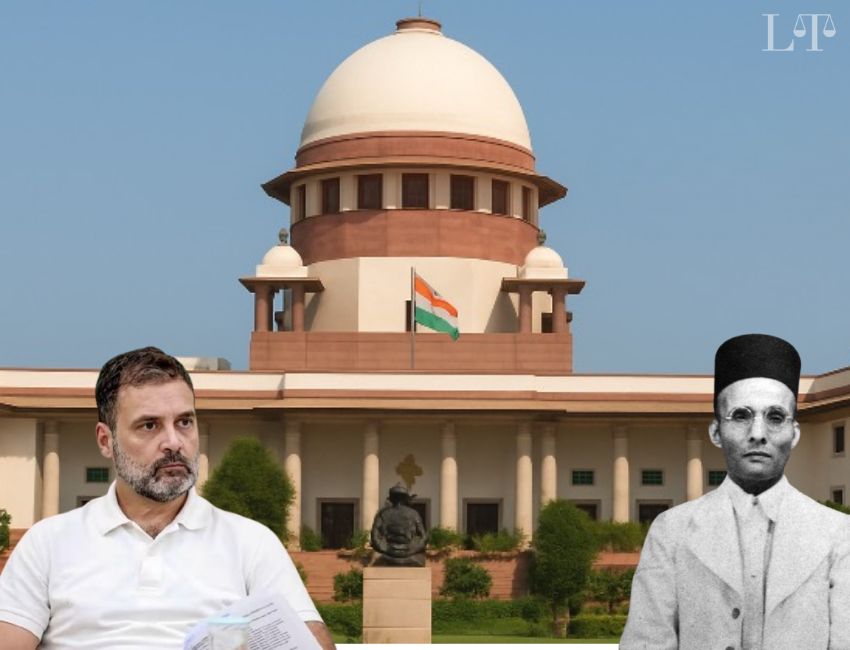
The Supreme Court on Friday ended the criminal case against Congress MP and Leader of Opposition Rahul Gandhi in Uttar Pradesh over his alleged remarks about Hindutva ideologue VD Savarkar.
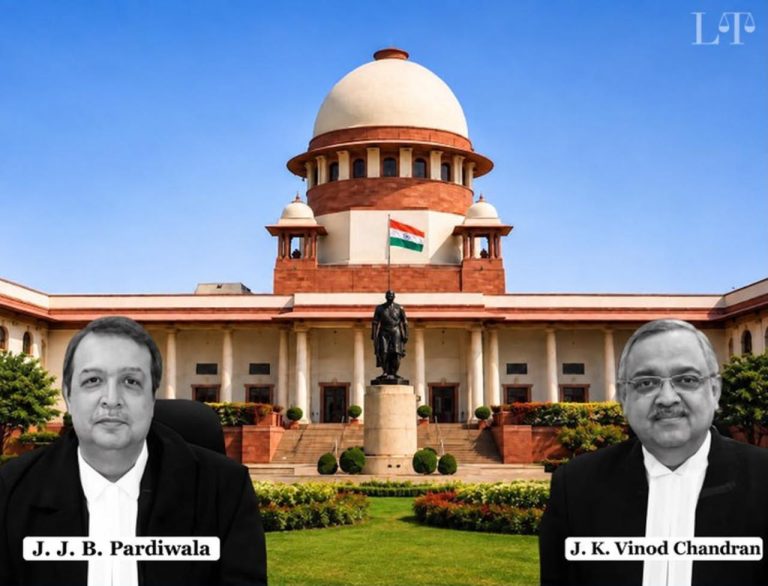
A Bench of Justice Dipankar Datta and Justice Sheel Nagu held that the case against Gandhi could not continue because the government had not given the legal approval required to prosecute him.
No Government Sanction
The Court quashed the complaint and the Magistrate’s orders after the Uttar Pradesh Government confirmed that it had not granted sanction to prosecute Gandhi under Section 153-A of the Indian Penal Code (IPC).
Gandhi had challenged the trial court’s summoning order. The complaint alleged that his comments on Savarkar were intended to promote communal disharmony and hatred. The Allahabad High Court had earlier refused to quash the case.
During the hearing, Justice Datta asked whether the State Government had granted sanction for the prosecution. Additional Solicitor General KM Nataraj, appearing for Uttar Pradesh, told the Court that no sanction had been granted.
Law on Sanction
The case involved allegations under Sections 153-A and 505 of the IPC. Under Section 196 of the Code of Criminal Procedure, the State Government’s prior sanction is necessary before a court can take cognisance of an offence under Section 153-A IPC.
The complainant’s counsel argued that, since there was no sanction, the summoning order could be set aside and the case could be sent back to the Magistrate for fresh consideration. The counsel also said that necessary steps could be taken if sanction was legally required.
Justice Datta, however, made it clear that the required government approval must be obtained before a court can formally take up the offence. It cannot be obtained later as a mere legal formality.
“If there is no sanction, that is the end of the matter,” Justice Datta stated.
Court Quashes Complaint
The Supreme Court then terminated the proceedings. The Bench said:
“In the affidavit filed by the State of UP, there is no disclosure of sanction having been granted to prosecute the appellant-accused. In such view of the matter, the complaint and orders passed by the magistrate stand quashed,”
Senior Advocate Dr Abhishek Manu Singhvi appeared for Gandhi.
Background of the Case
The case began with a complaint filed by Advocate Nripendra Pandey. He alleged that Gandhi had tried to create hatred and enmity in society through his remarks about Savarkar.
In December 2024, the trial court summoned Gandhi over statements allegedly made at a press conference. He was accused of calling Savarkar a servant of the British and alleging that Savarkar had received a pension from the British.
While issuing the summoning order, Addl. Civil Judge (Sr.Div.)/ACJM, Lucknow, Alok Verma observed:
“Distributing previously printed pamphlets and leaflets at press conferences demonstrates that Rahul Gandhi had weakened and insulted the basic characteristics of the nation by spreading hatred and enmity in the society”.
Earlier Court Proceedings
Gandhi later challenged the case before the Allahabad High Court, but his petition was not entertained. Justice Subhash Vidyarthi orally noted that Gandhi could approach the Sessions Court under Section 397 CrPC, corresponding to Section 438 of the BNSS. The petition was therefore disposed of.
Last year, the Supreme Court had stayed the proceedings while hearing Gandhi’s challenge. At that time, Justice Datta had orally strongly criticised the alleged remarks against Savarkar and questioned whether this was an appropriate way to treat freedom fighters.
The Court had also warned Gandhi that repeating such remarks could lead to “suo motu” contempt proceedings. However, because the required government approval was not obtained, the Supreme Court has now cancelled the complaint and all related orders against Gandhi.
Case Details: RAHUL GANDHI v. STATE OF U.P. AND ANR., SLP(Crl) No. 6196/2025