
 By
By 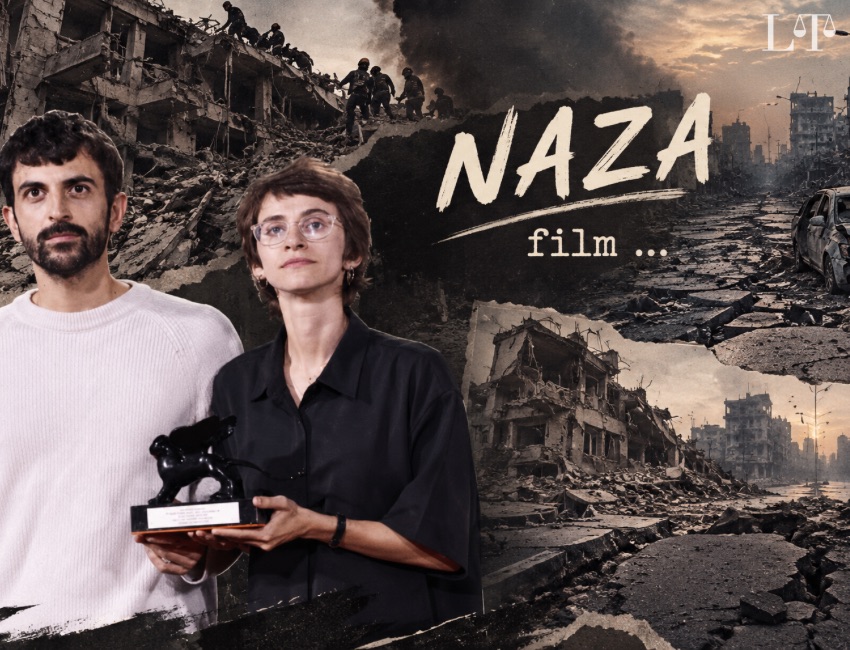
“NAZA,” a documentary by two Oscar winning Israeli filmmakers, details the systematic killing of Palestinian civilians during Israel’s offensive in Gaza. It premiered at the Venice Film Festival on September 10th and received a record breaking 25 minute standing ovation.
The film was made by Yuval Abraham and Rachel Szor, two of the four directors behind the Oscar-winning film “No Other Land.” It was shot at night on rooftops in Tel Aviv and covers the period since the war began.
According to the film’s official synopsis, it reveals in detail the systems behind Israel’s calculated mass killing of Palestinian civilians in Gaza. At the post-screening press conference, Abraham said: “the core of the film is a system of killing that has killed more than 70,000 Palestinians in Gaza, estimates say the real number is much higher, the way it worked and the way the world allowed it to happen.”
The title “NAZA” comes from a Hebrew military acronym meaning “collateral damage.” The people interviewed in the film describe the surveillance systems and remote bombing used in Israeli military operations. They say the military uses artificial intelligence to identify people it suspects of having ties to Hamas and then bombs their homes, often knowing that family members are inside.
Meanwhile, IDF Chief of Staff Eyal Zamir called the film “an attack on the State of Israel,” saying the military “will not allow IDF soldiers to be made targets through lies and blood libels” and will use “every tool at our disposal” against it. He said he has instructed the military’s top lawyer to “advance possible legal measures concerning the film and those involved in it,” claiming the documentary could have “potential implications” for soldiers’ safety and Israel’s national security.
Israeli journalist and commentator Raviv Drucker (known for The Source and The Bibi Files) said: “I’ve never found a film so difficult to watch. I physically cringed in my seat. ‘NAZA’ made me feel like a German.”
Israel’s Culture Minister, Miki Zohar, has asked legal and security officials to examine whether the filmmakers committed treason or aided the enemy during wartime, and whether their Israeli citizenship should be revoked.
In response, over a thousand filmmakers signed a petition in solidarity with Abraham and Szor. Signatories include prominent Israeli directors Ari Folman, Shlomi Elkabetz, Ran Tal, and Michal Aviad. The petition states that in recent days there has been “an unprecedented campaign of incitement against the film’s creators,” and that “the distance between it and the incitement to violence and physical threat to their lives is shrinking.” It also calls on “all who are still fighting for freedom of expression and creation to join in expressing support and solidarity with Rachel Szor and Yuval Abraham.”
My take:
For three years since the war began, Yuval Abraham has published investigations on various news outlets about how the Israeli military selects targets in Gaza and how it builds its target lists using extensive AI systems. He isn’t the only one reporting on this, the Israeli newspaper Haaretz has also published major investigations on the subject. Despite this, there was little public shock or outcry in Israel when these reports came out.
I believe that after “NAZA” is released, India’s foreign ministry may need to reconsider its close relationship with Israel and its current political leadership. I feel every young person in India should watch this documentary, because it shows how Israel’s war machine works and what I see as a planned mass killing of people in Gaza. I also worry that the heavy use of AI by the military, as shown in the film, is deeply concerning.
To the machine, it’s just a number. To someone in Gaza, it was breakfast, bedtime, a whole life.
Rajiv Chavan- is a Senior Advocate & Former President of Advocates Association of Western India