
 By
By 
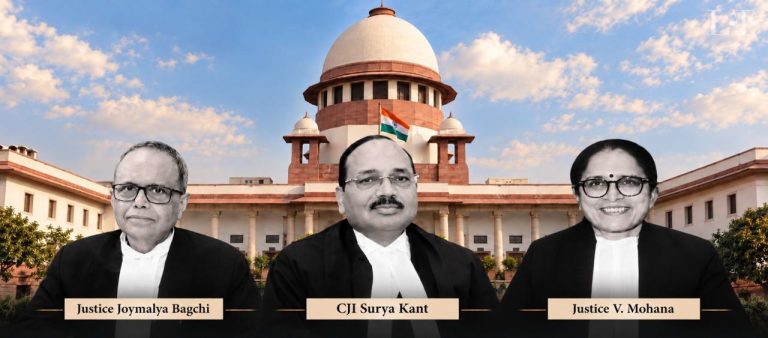
The Bombay High Court, comprising Justice R. I. Chagla and Farhan P. Dubash , gave the benefit of the Supreme Court’s one-time protection to law students who could not take their semester-end exams in 2025–26 only because of low attendance.
Who Can Get Relief:
In its judgment pronounced on August 10, 2026, the Bench held that the one-time protection granted by the Supreme Court is not limited to students in the final year or final semester of their law course. It also applies to students whose academic session was ongoing on November 3, 2025, the date on which the Delhi High Court delivered its judgment in the Sushant Rohilla case.
Supplementary Exams Ordered:
The Court told the College and Savitribai Phule Pune University to hold supplementary exams for eligible students. Students who pass these exams must be allowed to go to the next academic year, if they meet the other academic requirements.
About the Students:
The case involved about 41 students of ILS Law College. The College is connected with Savitribai Phule Pune University. The students were studying three-year and five-year law courses. Their attendance was between about 46% and 54.37%.
Why They Could Not Take Exams:
They were not allowed to take their semester-end exams for 2025–26 because they did not have the required attendance. They had filled in their exam forms and paid the exam fees. But their admit cards were not given to them because of the claimed shortage of attendance.
The students later asked the College to excuse, or condone, the shortage and allow them to take the exams. The College refused. It said that they could not take the exams because they did not have enough attendance.
Delhi High Court Order:
The issue started with a Delhi High Court judgment given on November 3, 2025, in Sushant Rohilla. The Delhi High Court gave directions about attendance in legal education. It said that, until the Bar Council of India reconsidered the attendance rules, students of recognised law colleges should not be stopped from taking exams or moving ahead in their studies only because their attendance was short.
The students in the Bombay High Court case relied on this Delhi High Court judgment. They said they were studying in the 2025–26 academic session. They understood that low attendance alone would not stop them from taking their exams.
But the legal position later changed because of two Supreme Court orders.
On May 26, 2026, the Supreme Court stayed the relevant direction of the Delhi High Court. But it clearly said that the stay would apply only in the future.
Supreme Court Protection:
After that, on July 21, 2026, the Supreme Court looked at the special problem faced by students during 2025–26. It gave a one-time protection to students whose academic session was still going on when the Delhi High Court judgment was given.
The Supreme Court said that such students should not be detained or stopped from taking the final exams of that academic session. It also said that students who could not take the exams, either fully or partly, could take a supplementary exam for that session.
Main Question Before Court:
The main question before the Bombay High Court was this: Did this one-time protection apply to every student whose academic session was going on November 3, 2025? Or did it apply only to students in the final year or final semester of their three-year or five-year law course?
The College said that the Supreme Court order should not be understood as a general relaxation of attendance rules. It said the protection was meant only for students who were close to finishing their law course and could lose a full academic year.
The College also relied on attendance rules in the Legal Education Rules and the University Ordinances. It said students who did not meet these requirements had no automatic right to take exams.
The students disagreed. They said the Supreme Court used the words “ongoing academic session.” It did not say that only students in the final year or final semester of the whole law course would get protection.
They said even a student in an earlier year could lose a full academic session if they were stopped from taking a semester-end exam. They could then be stopped from moving to the next academic year. So, they said the protection should apply equally to students in all years and semesters of three-year and five-year law courses.
Court Agrees With Students:
The Bombay High Court agreed with the students.
Meaning of ‘Final Examination’:
The Court carefully read the words and context of the Supreme Court’s July 21 order. It said that “final examination” did not mean the last exam of the whole law course. It meant the exam that ends the relevant academic session.
The Court said:
“The expression ‘final examination’ describes the examination concluding the concerned academic session; it does not describe the terminal year or terminal semester of the student’s entire law course.”
The Court also noted that the Supreme Court repeatedly connected the exam with the particular academic session. It had said that supplementary exams should be held “for this session only.”
No Personal Proof Needed:
The Bombay High Court also rejected the argument that every student had to prove that they had personally read the Delhi High Court judgment or changed their actions because of it.
The Court said the Supreme Court had already given clear, objective tests for deciding who would get the benefit. The questions were:
1.Was the student’s academic session still going on on November 3, 2025?
2.Was the student facing detention or loss of that academic session because of short attendance?
The Court said:
“No further subjective test is prescribed in paragraph 8.”
It said that looking into the personal state of mind of every student would add a condition that the Supreme Court had not added.
The judgment also dealt with students studying in Maharashtra.
The College argued that Maharashtra students could not say that they honestly relied on the Delhi High Court judgment. This was because the Bombay High Court had earlier made orders that took a different view on attendance rules.
The Bench rejected this argument. It said that the Supreme Court knew that several High Courts had taken views different from the Delhi High Court. Even then, the Supreme Court did not make an exception for any State or territory in its July 21 order.
Maharashtra Students Covered:
So, the Bombay High Court said that students could not be refused protection simply because they were studying in Maharashtra.
The Court also made it clear that it was not giving relief because the Delhi High Court judgment in Sushant Rohilla was binding on the Bombay High Court.
Supreme Court Order Is Binding:
Instead, the protection came directly from the Supreme Court’s later order dated July 21, 2026. The judgment states that, “By its subsequent order dated 21st July 2026, the Hon’ble Supreme Court granted, as a one-time measure, protection to students whose academic session was ongoing when the judgment in Sushant Rohilla (supra) was rendered, and directed that such students should not be detained or prevented from appearing for the final examinations for the said academic session.”
The order further states, “We make it clear, however, that the relief granted by this judgment does not proceed on the basis that the judgment of the Delhi High Court in Sushant Rohilla (supra) constitutes a binding precedent upon this Court. The said judgment forms part of the factual and legal background which led to the subsequent orders passed by the Hon’ble Supreme Court.”
Therefore, the Bombay High Court did not treat the Delhi High Court judgment as binding on it. It followed the later directions of the Supreme Court.
The judgment further states that, “According to the College and the University, the remaining Petitioners continue to be governed by Rule 12 of the Legal Education Rules and Ordinances 68 and 70 of the University. In view of these rival submissions, it would be appropriate to first consider the effect and applicability of the order dated 21st July 2026 passed by the Hon’ble Supreme Court.”
The students said that the Bar Council of India’s Legal Education Rules required 70% attendance. They also raised questions about the University Ordinances and the power to condone, or excuse, a shortage of attendance.
Attendance Issue Left Open:
But the Supreme Court’s July 21 order had already given one-time protection to affected students. Therefore, the Bombay High Court said it did not need to decide the wider attendance dispute in this case. It left those issues open for a suitable future case.
The Court found that the Petitioners met the objective requirements in paragraph 8 of the Supreme Court’s July 21, 2026 order. For this one-time protection, their individual attendance percentages did not decide whether they would receive the benefit. The Supreme Court’s order did not set any minimum attendance percentage for the protected group.
The Court noted:
“The present batch comprises approximately 41 students pursuing different years of the three-year and five-year law courses. Their attendance ranged between 46% and 54.37%, and they were prevented by the College from appearing for their respective semester-end examinations for the academic session 2025–26 solely on account of shortage of attendance.”
Therefore, the College, the University, or the Court could not introduce a minimum attendance requirement of 50%, 55%, 65%, or any other percentage, because the Supreme Court had not set one.
At the same time, the Court said the protection was limited.
Relief Has Limits:
It applied only to students who were stopped from taking an exam because they had low attendance. It did not remove other academic requirements or excuse a failure to submit exam forms or pay fees, disciplinary proceedings, or any other reason that made a student ineligible.
The Court also protected students who had already taken their exams under interim orders passed during the case.
These students had a right to have their results declared and their marksheets given, based on how they performed. If a student had passed and had already been allowed to go to the next academic year, that progress was confirmed.
Protection for Students Who Took Exams:
Their progress could not be disturbed only because of the attendance shortage covered by the Supreme Court’s one-time protection.
For students who were not allowed to take their exams, the Court said they must get a chance to take supplementary exams in the subjects that they could not take.
These supplementary exams would be treated as exams for the 2025–26 academic session.
The affected students would not have to repeat that semester only because of the attendance shortage covered by the one-time protection.
The Court also said that this protection is for a clearly identified group of students. It is not only for students who went to court.
Final Directions:
In its final directions, the Bombay High Court said that students would get the Supreme Court’s one-time protection if:
- their academic session was still going on on November 3, 2025, and
- they were stopped from taking their semester-end exams during 2025–26 only because of short attendance.
The Court said that other students of the College in the same situation must get the same benefit.
However, this was subject to what the Court said about cases that had already become final before July 21, 2026.
The University and the College were told to work together and hold supplementary exams for eligible students. These were students who could not take their semester-end exams, fully or partly, only because of short attendance.
Four-Week Deadline:
The exams had to be held as soon as possible. They had to be held within four weeks from the date the judgment was uploaded.
The students also had to be told the exam timetable and given the needed information so that they could prepare for and take the exams.
Move to Next Year:
The Petitioners argued that the one-time benefit given by the Supreme Court should not be limited to students in the final year or final semester of their law course. They said it should apply to all students studying in three-year or five-year law courses during the academic year 2025–26, no matter which year or semester they were in.
The Bombay High Court accepted this view. It said that the protection is linked to the loss of an academic session, not on whether a student is in the final year or final semester.
The Court said:
“If the Hon’ble Supreme Court intended to protect only students in the final year or final semester of the law course, it could readily have said so. Instead, it adopted as the criterion the academic session which was ongoing on 3rd November 2025 and protected students facing the loss of that session. We are, therefore, unable to read into the order any year-wise or semester-wise restriction which the Hon’ble Supreme Court has not imposed.”
The Court further said:
“The Petitioners who appeared for their examinations pursuant to the interim orders passed by this Court are entitled to have their results declared and their marksheets issued in accordance with their performance in such examinations. Where such Petitioners have successfully passed the examinations and have, pursuant to orders passed by this Court, been permitted to progress to the succeeding academic year, such academic progression cannot now be disturbed solely on account of the shortage of attendance which is covered by the one-time protection granted by the Hon’ble Supreme Court.
In respect of any Petitioner who has already successfully passed the semester-end examinations and has been permitted, pursuant to interim orders passed by this Court, to progress to the succeeding academic year 2026–27, such academic progression is hereby confirmed and shall not be disturbed solely on account of the shortage of attendance during the academic session 2025–26.”
The Court disposed of all the cases on these terms. After the order was pronounced, the College asked the Court to stay the judgment. The Court refused.
Case Details: Aniruddha Gaurav Gursal vs State of Maharashtra (Writ Petition 6027 of 2026)