
 By
By 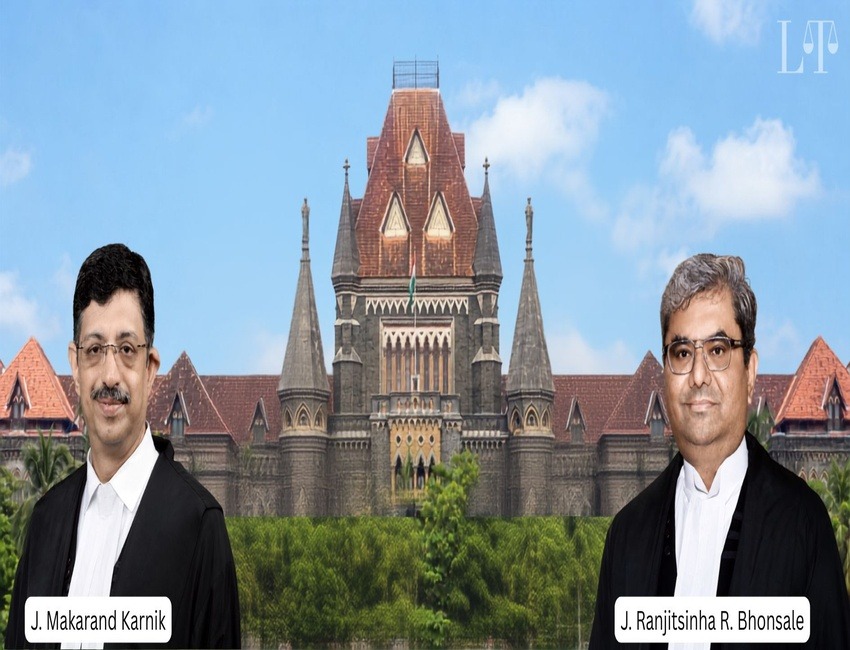
The Bombay High Court has ruled that once a reservation on land expires under the law, planning authorities cannot reserve the same land again in a later Development Plan, even if the new reservation is for a different purpose.
A Division Bench comprising Justice Makarand S. Karnik and Justice Ranjitsinha Raja Bhonsale was hearing a writ petition filed under Article 226 of the Constitution and Section 127 of the Maharashtra Regional Town Planning Act, 1966 (MRTP Act).
Heirs Challenge Land Reservation:
The petition was filed by the legal heirs of the original landowner, Baburao Gangadhar Jadhav. They asked the Court to declare that the reservation on their land under the sanctioned Development Plan for Nashik Municipal Corporation had lapsed, so that the land could be used by them.
Background of the Land Dispute:
The dispute concerns a plot admeasuring 1500 sq.mtrs., bearing Survey No. 14/1/A/3, in Village Anandwalli, Taluka and District Nashik. When the State sanctioned the Development Plan for Nashik Municipal Corporation on 16 November 1993, this land was reserved for two separate civic purposes – an Electric Sub Station and a Post Office.
Purchase Notice by the Petitioners
Since the authorities did not take any steps to acquire the land, the Jadhav family issued a purchase notice on 12 December 2006 under Section 127 of the MRTP Act. The Nashik Municipal Corporation replied only in January 2017.It said that it was not responsible for acquiring the land, but it did not dispute that the purchase notice was valid.
Meanwhile, Maharashtra State Electricity Distribution Company Limited (MSEDCL’s) internal records from 2007–08 showed that it found the land too expensive and was looking for a cheaper alternative site.
Earlier Litigation by the Adjacent Owner
The Court noted that this was not the first time the same reservation had been challenged. An adjoining landowner, Komal H. Malpani, had faced the same situation. Her land also had reservations for an Electric Sub Station and a Post Office. She had approached the High Court against these reservations.
In 2014, the Court ruled in her favour. It held that the reservation had lapsed and directed the State to officially notify the lapse in the Official Gazette.
Re-Reservation of the Same Land
Despite this, the Jadhav family’s land was given a fresh reservation. Reservation No. 244 for “public amenities space” was notified on 9 January 2017.
The petitioners argued that once a reservation lapses through the statutory process, the same land cannot legally be reserved again, even if a different name or purpose is given to the new reservation.
Court’s Reasoning
The Bench examined earlier judgments on the same issue. These included Supreme Court rulings that land once freed from a reservation cannot be placed under a fresh reservation. The Bench also considered its earlier decisions holding that once a reservation ends by operation of law, the land remains free from reservation, even if a later reservation is for a different purpose. Referring to these precedents, the Court observed:
“… land once dereserved from the Development Plan by operation of law cannot be reserved again in a revised plan with some variation.”
The Court said that all these judgments establish the same principle: if a planning authority does not acquire the land within the time allowed by law, it loses the right to reserve the same land again later.
Applying this principle, the Bench found the case straightforward. The 1993 reservation had already lapsed as per the law. A neighbouring case involving the same facts had also confirmed that the reservation had lapsed. Despite this, the State reserved the same land again in 2017.
The Court held that there was no legal basis for the State to do so and observed:
“Considering the facts of the case and the aforenoted law, we are of the view that land which is dereserved from the revised Development Plan by operation of law cannot be reserved again in the Development Plan with some variation in purpose.”
High Court’s Final Decision:
The High Court allowed the petition and passed the following directions:
1.The reservation on the petitioners’ land for public amenities under Reservation No. 244 was declared lapsed. As a result, the land was released from the reservation and can now be developed according to the permissible use.
2.The respondent authorities were directed to correct the municipal and revenue records to show that the land has been released from the reservation.
Case Details: Baburao Gangadhar Jadhav (Since Deceased) Through Legal Heirs v. State of Maharashtra order