
 By
By 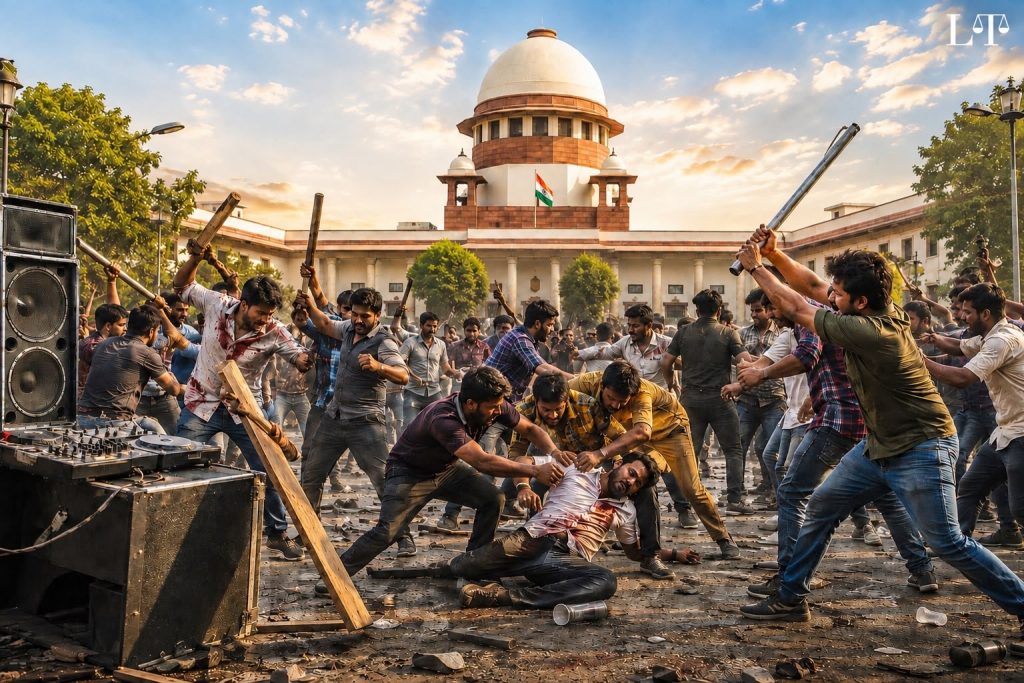
The Supreme Court recently upheld the acquittal of 20 people accused in a murder case.
The Court said the trial court had convicted them mainly on eyewitness statements that were almost exactly the same. This was doubtful because the incident involved many people, and the witnesses were standing in different places. Some witnesses were also being attacked themselves.
The Court observed:
“It is a settled principle that an identical and stereotyped version bears the imprint of tutoring rather than of truthful recollection.”
A Bench of Justice Sanjay Karol and Justice Augustine George Masih upheld the Bombay High Court’s Nagpur Bench decision. The High Court had found the prosecution’s case suspicious because the eyewitnesses gave identical accounts despite being in different positions during the incident.
The Court agreed that the lack of any differences in their statements weakened the prosecution’s case and supported the acquittal.
The bench stated:
“In a normal course, where a single occurrence involving a large number of persons is witnessed by several persons who are differently placed, and some of them themselves are under assault, it is expected and natural that the accounts which they give will ordinarily bear the marks of individual perception. Differences of detail in such a narration are the natural product of the circumstances in which the observation was made, and their presence lends assurance rather than detracting from it.”
The Court also agreed with the High Court that it was unsafe to convict the accused based on the eyewitnesses’ detailed and identical claims about the specific role played by each accused person.
Endorsing the High Court’s view, the court said:
“The High Court found that the witnesses had spoken in almost identical fashion without moving an inch away from each other, and that the absence of any role in the carrying of a weapon attributed to those who are said to have held the victims appeared to have been done thoughtfully so as to create a show of truthfulness…What it declined to accept as safe and correct was the minute and uniform attribution of roles of all 23 persons which was described by the witnesses. That distinction is a legitimate one.”
Case Background:
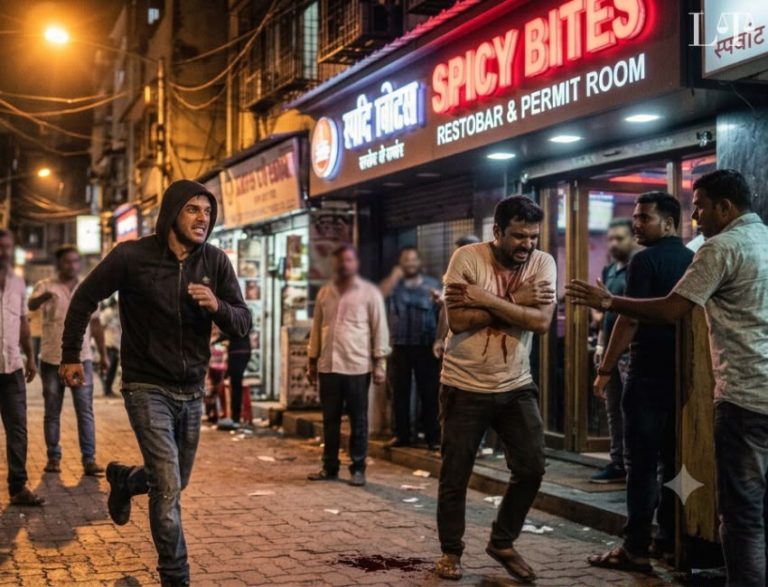
According to the prosecution, the accused dragged and assaulted the deceased and other people after a dispute over the playing of a DJ.
It was alleged that the accused attacked the deceased and other victims, including injured eyewitnesses, with iron pipes, an iron bar, and wooden planks.
Some accused were said to have held the victims, while others allegedly encouraged the assault. The deceased, Avinash, died at the spot because of his injuries. An FIR was then registered.
The trial court framed charges under Sections 147, 148, 149, 302 read with Section 149, 307 read with Section 149, and 120-B of the IPC. Charges under Section 135 of the Bombay Police Act, 1951, were also framed.
There were 23 accused persons. One died during the trial. The trial court convicted the remaining 20 accused persons for murder and acquitted two others of all charges.
Later, the High Court overturned the trial court’s decision and acquitted the accused persons. It relied on circumstances showing that the eyewitnesses may have been tutored.
The informant and the State challenged the High Court’s acquittal before the Supreme Court.
Court’s Decision:
The Supreme Court dismissed the appeals and upheld the acquittal.
The judgment was written by Justice Masih. It listed several reasons for acquittal, including the identical eyewitness statements. The Court found it unlikely that the accounts would be so identical, especially because the statements were recorded several days after the incident.
“A correspondence as complete as the present one, extending to the description of the acts of 23 persons and even when it is given not immediately but some days after the occurrence, is of the opposite character. The High Court was entitled to regard it as a circumstance raising a serious doubt as to whether these witnesses were speaking to what they had seen or to what they had been tutored to say,” the Court observed.
The Court also rejected the argument that the injured witnesses automatically made the prosecution’s case stronger.
It said: “an injured witness is a reliable witness as to the assault upon himself, however, his evidence does not, for that reason alone, become a reliable inventory of the precise part played by each of 23 persons, whom he recounted identically some days later.”
The Apex Court consequently dismissed the appeals and confirmed the acquittal of the accused persons.
Case Details: Nirmala Bai Devidas Chavhan vs State of Maharashtra & Ors. (Criminal Appeal No. 502-507 of 2023)