
Judge Goes Viral for Savagely Putting Rioters in Their Place



The Supreme Court has ordered the Income Tax department to complete the valuation of properties owned by Golden Forests India Limited (GFIL) within four weeks. This directive comes as approximately 1.4 million investors, defrauded by the company, await the return of their investments.
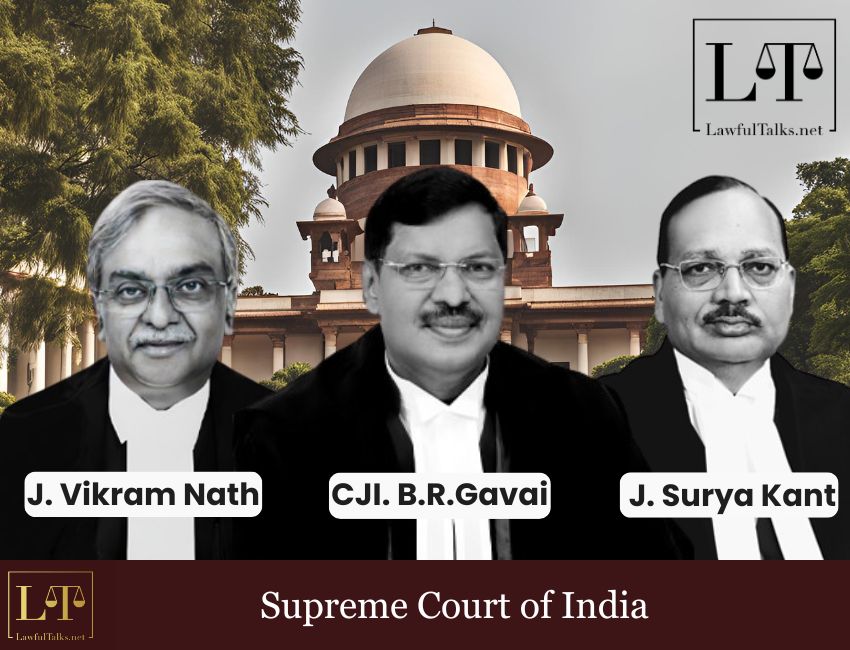
The Chandigarh-based GFIL acquired about 7,750 acres of land across India. On July 16, a bench of Justices B.R. Gavai and Sanjay Karol addressed petitions from investors seeking progress on the sale of company assets to reclaim their investments. The court-appointed Mr. Sunil Fernandes, Senior Advocate as amicus curiae to assist in the matter, with the next hearing set for August 28.
GFIL, which began operations in 1987, offered investment schemes promising high returns, attracting numerous investors. Within a year, the company raised Rs. 311 crore, with its capital base growing to Rs. 1,037 crore. In 1997, the Securities and Exchange Board of India (SEBI) began investigating the company, and by 1998, GFIL was prohibited from alienating its properties due to financial and other irregularities.
Investors informed the Supreme Court about illegal mining activities on GFIL properties in Panchkula. The bench instructed the district magistrate of Panchkula to investigate and report within four weeks. The case, initially handled by multiple high courts, was transferred to the Supreme Court in 2004, which formed a committee led by former Delhi High Court Chief Justice R.N. Agarwal to manage investor and creditor claims.
In 2018, the Supreme Court directed that 70% of the funds collected, approximately Rs.700 crore, be disbursed to verified investors. The court continues to monitor the committee's progress and the Income Tax authorities' valuation efforts.
In January 2023, the court emphasized the importance of achieving the best price for the properties in a straightforward manner to protect investor interests. The court suggested a composite auction of all properties, including liabilities and encumbrances, to avoid multiple auctions and secure the best price.
Latest News









































































Subscribe to our Newsletter!
Sign up for free and be the first to get notified about curated content just for you.