
 By
By 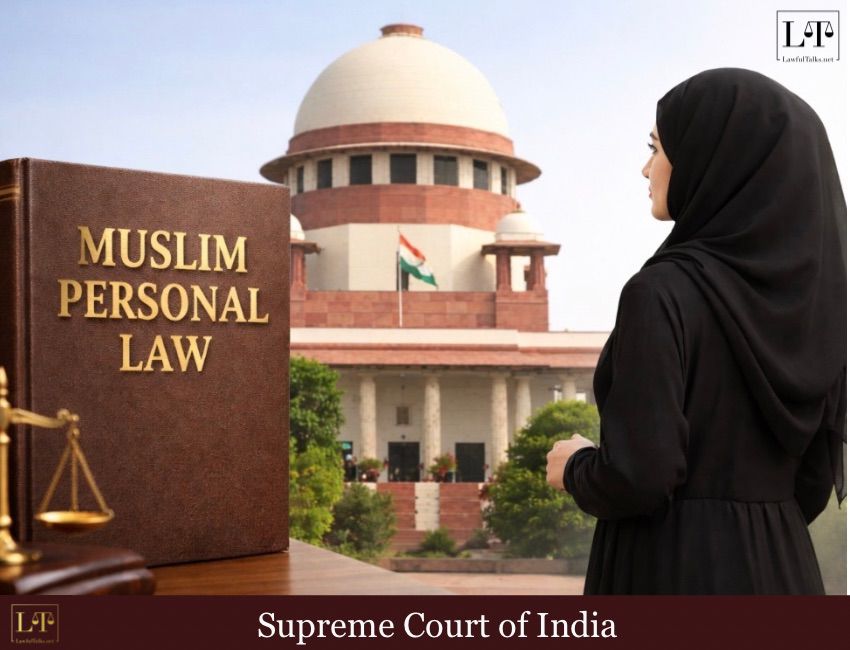
In a significant development, the Supreme Court has appointed Senior Advocate Shoeb Alam as amicus curiae to assist it in an appeal challenging a Kerala High Court ruling that allows Muslim women to dissolve their marriages through khula without the husband’s consent. The decision is now being examined about how it interprets Muslim Personal Law.
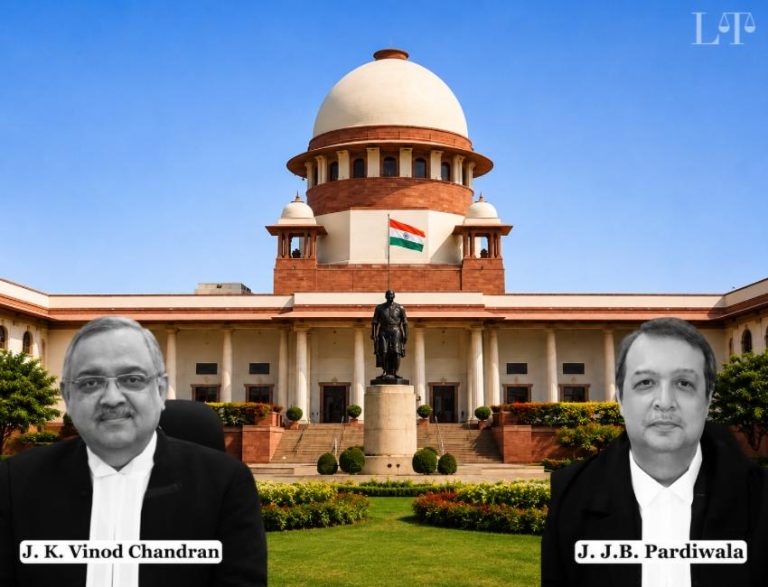
A bench of Justice Sanjay Kumar and Justice K. Vinod Chandran has fixed the case for a full hearing on April 22, 2026, noting the need for expert assistance:
“List for hearing in the list of regular hearing matters on 22.04.2026. We request Mr. Shoeb Alam, learned senior counsel, to assist this Court in this matter, as it involves a question of Muslim personal law.”
Background of the dispute:
The controversy began with a Kerala High Court judgment in which Justices A. Muhamed Mustaque and C.S. Dias held that a Muslim woman has the right under Islamic law to end her marriage through khula without needing her husband’s consent.
The ruling came while dismissing a review petition against an earlier order that had granted a divorce decree to a Muslim wife under the Dissolution of Muslim Marriages Act, 1939.
In that earlier decision, the bench said, “the right to terminate the marriage at the instance of a Muslim wife is an absolute right conferred by the Holy Quran and is not subject to the acceptance or will of her husband.” The court compared this to a husband’s talaq rights and clarified that khula becomes effective when the wife declares that the marriage has ended, returns the dower or benefits received, and follows reconciliation efforts.
Court’s Criticism While Dismissing Review:
While dismissing the review petition, the High Court strongly criticised where the plea seemed to come from:
“This is a typical review portraying that Muslim women are subordinate to the will of their male counterparts. This review does not look innocuous at the instance of the appellant, but rather appears to have been fashioned and supported by clergies and the hegemonic masculinity of the Muslim community who are unable to digest the declaration of the right of Muslim women to resort to the extra-judicial divorce of khula, unilaterally.”
The court also clarified:
“In the absence of any mechanism in the country to recognize the termination of marriage at the instance of the wife when the husband refuses to give consent, the court can simply hold that khula can be invoked without the conjunction of the husband.”
The court rejected the arguments that a wife must first ask her husband for talaq and go to a qazi or judge only if he refuses, stating:
“It is acknowledged by Islamic law that the Muslim wife has the right to demand termination of marriage. The argument that if the husband refuses, she has to move the Court stares at us. For what purpose she has to move the Court, begs the question. The Court is neither called upon to adjudicate nor called upon to declare the status, but simply has to pronounce termination of marriage on behalf of the wife. The Court in our country is not a guardian of an adult and able woman.”
The bench also rejected the claim that women do not have an absolute right to khula and emphasised judicial independence, saying courts “shall not surrender to opinions of Islamic clergy who have no legal training on point of law,” while still respecting their views on matters of faith and rituals.
Case Detail: X v. Y (Petition for Special Leave to Appeal (C) Nos. 8936-8937/2024)