Juvenile Justice Norms Not Binding For Age Determination Under POCSO: Kerala HC

- January 09, 2026


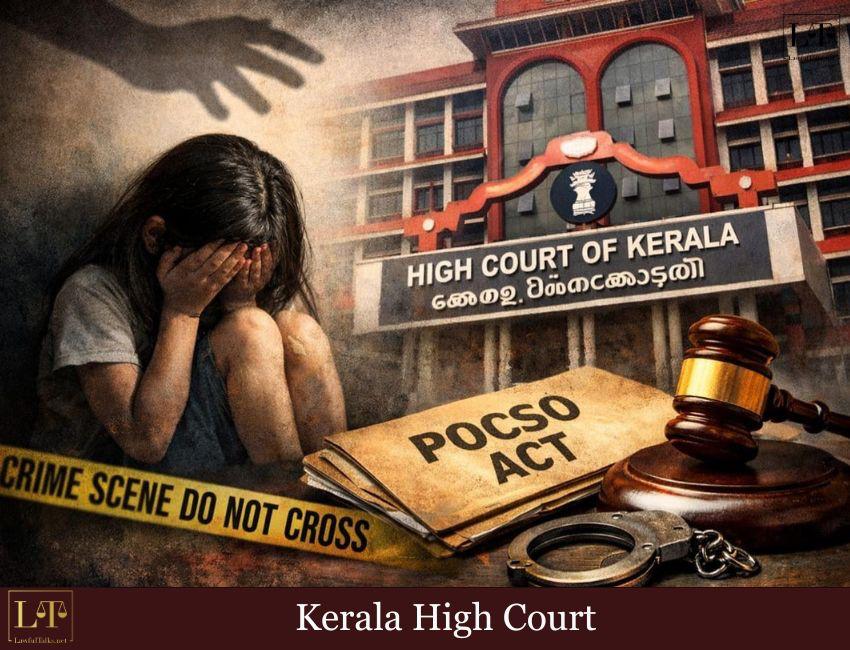
A victim’s age is crucial in cases under the Protection of Children from Sexual Offences Act, 2012 (POCSO Act), as it determines whether the victim is a “child” under the law. However, there is uncertainty over whether age can be proved only by following the guidelines under juvenile justice laws or also through other means. This issue came up for authoritative consideration before Justice Bechu Kurian Thomas of the Kerala High Court in Suresh K. v. State of Kerala. While defining the parameters of Section 34 of the POCSO Act, the ruling also revisits previous Supreme Court and High Court rulings on the matter.
Background
The Special Court for Atrocities Against Women and Children, Kasaragod, convicted the appellant of the offences under Sections 376(2)(i) and 376(2)(n) of the Indian Penal Code and Section 6 a/w Section 5(l) of the POCSO Act. The prosecution claimed that the accused repeatedly sexually assaulted a 13-year-old girl in her house between September 2015 and February 2016.
During the trial, the prosecution’s case mainly rested on the evidence of the victim and her mother, the medical examination of the victim and the birth certificate issued by the Grama Panchayat. The defence in appeal mostly maintained that the victim’s age was not proved as per the requirement of law, the birth certificate did not have the name of the victim but it could relate to the victim’s sibling.
The appeal thus squarely raised two issues: whether the offence was proved beyond a reasonable doubt, and whether the prosecution had legally established the age of the victim for POCSO.
Court’s Analysis And Judgment:
The Court first examined the evidence relied on by the prosecution. The victim’s testimony was found to be consistent, detailed, and corroborated by medical evidence. The Court noted that once the foundational facts of sexual assault are established, the presumption under Section 29 of the POCSO Act operates against the accused.
The Court observed, “When the evidence of the victim is unwavering and of a sterling quality, the foundational facts get established. Once the foundational facts are proved, section 29 of the POCSO Act sets in and creates a statutory presumption of guilt of the accused.”
On acknowledging the evidence, the Court affirmed the trial court’s finding that the accused had committed repeated penetrative sexual assault on the victim.
The POCSO Act's method for determining a victim's age was the main legal question. The appellant argued that age must be proven strictly in compliance with the Juvenile Justice Rules, citing Jarnail Singh v. State of Haryana. The Court highlighted Section 34 of the POCSO Act and made it clear that although juvenile justice laws offer a recognised method for determining age, it is not the only or required approach in all POCSO cases. The Court cautioned that judgments should not be read as if they were statutory provisions and clearly distinguished between interpreting the law and relying on judicial precedent.
The Court held, “The POCSO Act does not stipulate in section 34(2) that when the victim is a child, age can be determined only as per the law relating to juveniles.”
Referring to Section 34(2), the Court emphasised that the Special Court is required to satisfy itself regarding the victim’s age and must record reasons for such determination, without being limited to only one method prescribed by law.
The judgment further clarified that age determination can be based on evidence admissible under the Indian Evidence Act, including oral testimony and documentary records. The bench noted that unless a statute expressly bars such methods, courts are not prevented from relying on them.
The Court observed that, “Under the law of evidence, all facts, except the contents of documents, can be proved by oral evidence… Even section 35 of the IE Act can be resorted to for determining the age of a victim in a POCSO offence.”
In the case of Suresh Kumar v. State of Kerala, the victim had repeatedly stated her date of birth which matched the date given in the birth certificate. This testimony was not disputed during cross-examination, nor did the accused dispute the age even in his statement under Section 313 of the Code of Criminal Procedure. The Court also relied on precedents from the Kerala High Court, ruling that juvenile justice provisions do not invalidate the admissibility of credible/reliable evidence under the Evidence Act when determining the age of a POCSO victim.
Accordingly, the Kerala High Court dismissed the appeal and upheld the conviction and sentence handed down by the trial court.
Case Title- Suresh K. V. State of Kerala Crl. A. No. 651 of 2021


































































































































































































































































































Sign up for free and be the first to get notified about curated content just for you.