
 By
By 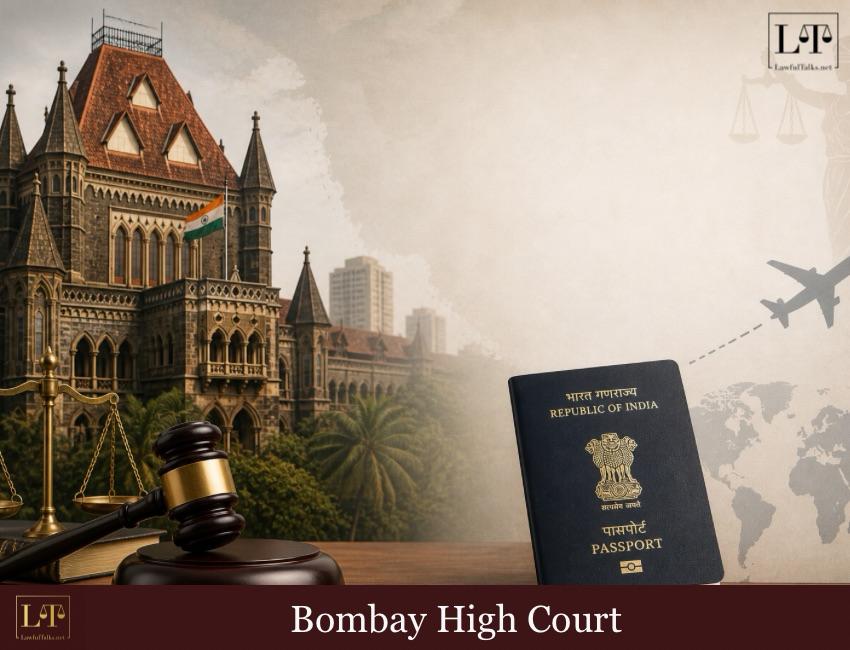
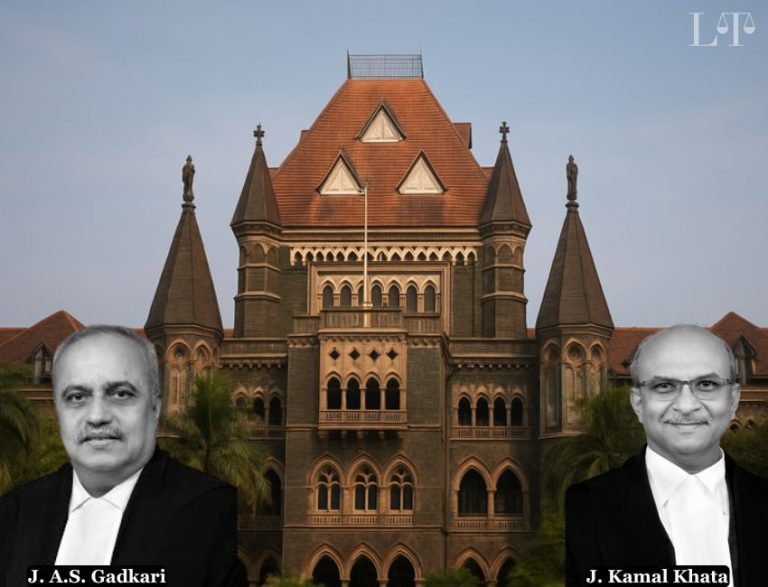
The recent judgment delivered by the Division Bench of the Bombay High Court, comprising Justice A. S. Gadkari and Justice Ranjitsinha Raja Bhonsale, carefully explains how the Passports Act, 1967 and Central Government rules work when a person has a criminal case pending but wants to renew or reissue a passport. The Court clearly links this issue to the right to personal liberty under Article 21 of the Constitution.
Court Explains Passport Law & Liberty:
At the start, the Court refers to the Supreme Court’s decision in “Mahesh Kumar Agarwal v. Union of India”, where it was said that “liberty, in our constitutional scheme, is not a gift of the State but its first obligation.” The court also stressed that any restriction on a person’s right to travel must be narrow, proportionate, and clearly based in law, so that procedures do not turn into endless restrictions that harm dignity and freedom. The Court also relied on “Maneka Gandhi v. Union of India”, which held that the right to travel abroad is part of personal liberty under Article 21 and cannot be restricted without proper legal procedure.
Facts of the Case:
The case involves three writ petitions filed by people who are accused in criminal cases. Their cases are still pending, and they were facing problems in renewing or reissuing their passports, which they needed for their jobs.
In the first case, the petitioner was facing trial under the Indian Penal Code. His request to the Magistrate for a no-objection certificate (NOC) for passport renewal was rejected. The Magistrate said court permission is not needed for renewal, but would be required if the person actually wanted to travel abroad.
-
In the connected cases, the petitioners were seafarers. Their work visas depended on valid passports. They came to know about pending summons cases only during police verification, after already applying for passport reissue. Even though no cognizance had been taken, their passport renewal was stalled, seriously affecting their livelihood.
What the Law Says:
The Court then explained the Passports Act, 1967 in a simple and clear way. It said the purpose of the law is “to provide for the issue of passports and travel documents, to regulate departure from India of citizens and other persons, and for matters incidental or ancillary thereto.” The Court clearly stated that the main power to decide on passports lies with passport authorities, and a passport can be refused only on specific and limited grounds.
It highlighted that “the passport authority shall, after making such enquiry as it considers necessary, either issue a passport or refuse to issue it only on the specific grounds mentioned in section 6.” It also referred to Rule 12 of the Passport Rules, 1980, which says “an ordinary passport for a person above 15 years is normally to be valid for ten years from the date of issue and renewal is to be granted in such ten-year blocks unless the applicant desires otherwise or the authority records reasons for a shorter period.”
The Court again relied on “Maneka Gandhi v. Union of India” and also cited “Vangala Kasturi Rangacharyulu v. CBI”. It said that restrictions on passports must be interpreted strictly and should not be used to deny passports to people who are not proven guilty. Based on this, the Court said that “the grounds for refusal of a passport are restricted, keeping in mind that the right to travel is an essential and integral part of the right to life and personal liberty.”
Court’s Guidelines:
To solve the practical problems faced by applicants, the Court laid down detailed guidelines:
-
Passports must be issued or renewed as per Rule 12 of the Passport Rules, 1980, unless a Court gives a reasoned order otherwise.
-
If the applicant files an undertaking and affidavit verified by the criminal Court, the Passport Authority should not refuse renewal just because a Court order is not produced.
-
Applications for NOC or permission must be made to the criminal Court with full details like case status, stage of trial, number of witnesses, and legal sections involved.
-
The NOC or permission must include all relevant orders and conditions, and compliance by the applicant must be verified from the court or police.
-
It must also state whether the accused is regularly attending court hearings.
-
The Public Prosecutor’s office, through police or the Investigating Officer, must verify the accused’s background and inform about any new FIRs (only for information).
-
Serious cases (like grave offences, financial frauds, offences against the State or economy) must be decided by the criminal Court on its judicial side.
-
For fresh passport applications, the Passport Authority should not insist on NOC and must follow the normal legal procedure.
-
If a person already has a valid passport and visa but pages are exhausted, a new passport should be issued without insisting on NOC, subject to any future Court orders.
Case Details: Sagar Pradeep Oak vs. State of Maharashtra. Writ Petition no. 1788/2025